

 24/7 365 days a year!
 Schedule
 +500 Positive Reviews
Why Your Electrical Panel Keeps Tripping and How a Panel Swap Out Can Help
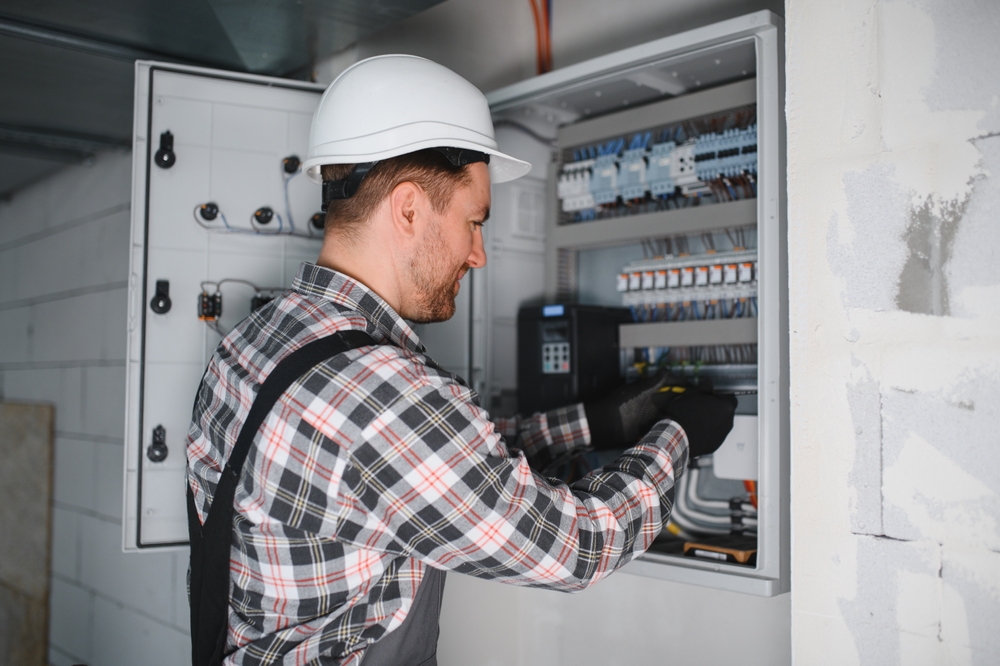
Does your electrical panel keep tripping? Tripping circuit breakers is a common frustration for homeowners, especially since the cause is not always clear. In this guide, you’ll learn some of the most common reasons for repeated circuit breaker trips, look at what electrical panel repairs might be possible, and understand the signs that it’s time to invest in an electrical panel upgrade for safety, reliability, and energy efficiency.
What It Means When a Breaker Trips
Your electrical panel is responsible for taking the high current from the municipal power grid and stepping it down to a level that’s safe for home use. It divides all power-drawing appliances in the home into circuits, which are individually controlled by the panel. If one of these circuits becomes overloaded (i.e., when there’s more current than the circuit can safely handle), a safety mechanism known as a circuit breaker is activated.
As the name implies, a circuit breaker breaks the circuit, which shuts off power to any devices on that circuit. This prevents the circuit and connections from overheating, ensuring you don’t end up with a dangerous electrical fire in your home. While occasional circuit breaker trips are not necessarily a sign of a bigger problem, you should pay attention if your electrical panel keeps tripping repeatedly.
Common Reasons Circuit Breakers Keep Tripping
Why does my breaker keep tripping? It’s a question we receive often—and while there’s no way to definitively get the answer without a full electrical safety inspection, there are a few common causes to be aware of:
Overloaded circuits
One of the most common causes of a breaker that keeps tripping is simply an overloaded circuit. This occurs when there’s too much demand on a single circuit — if you connect too many appliances or have too many high-demand devices on a single circuit. If you’ve ever had a tripped circuit breaker when using your toaster and kettle at the same time, this is likely the cause.
Pay attention to what devices are on what circuits, and spread out high-demand devices (such as space heaters, microwaves, hair dryers, and EV chargers) across multiple circuits to prevent interruptions.
Short circuits
Another potential cause of an overloaded circuit breaker is an issue with the circuit itself. If parts of the circuit come into contact where they shouldn’t, it can cause resistance issues, often leading to an immediate breaker trip when the circuit gets power. This is usually caused by faulty wiring or damaged outlets.
Ground faults
Tripping breakers can also occur due to ground faults. This happens when insulation around a current-carrying conductor (such as the circuit’s “hot wire”) fails, allowing the current to escape from its intended path. This is especially common in kitchens, bathrooms, and outdoor outlets, where prolonged water exposure and wiring damage are more likely. In addition to repeated circuit breaker trips, ground faults pose a major risk of electric shock and fires.
Faulty appliances
If circuit breakers only trip when you turn on certain appliances, electrical panel problems may not be the issue at all. Older appliances may draw too much power for your system to handle, leading to repeated breaker trips. In this case, you may need to repair or replace the appliances causing the issue.
Aging or undersized electrical panels
Over time, the average household’s electrical needs have increased dramatically. If your panel still uses 100-amp service, it may be time for an electrical panel replacement and an upgrade to 200-amp service. This will support your current devices with room to add more in the future.
Signs Your Electrical Panel May Be Outdated or Failing
How do you know when to replace an electrical panel? There are a few signs homeowners should be on the lookout for:
- Circuit breakers tripping multiple times per week
- Your electrical panel is more than 25 to 40 years old
- Your panel still has 100-amp service instead of the modern standard of 200-amp service
- Your lights dim or flicker when you turn on appliances
- You’re running out of circuits to power your devices and appliances
- Panel feels warm to the touch or makes a buzzing noise
- You’re adding new electrical loads to the home, such as an EV charger, hot tub, or major remodels involving new electrical installations
How Modern Electrical Demand Strains Older Panels
When is it time to invest in a panel swap? Electrical needs have changed in most households, and as we rely on more appliances and devices, it’s important to recognize the signs that it’s time for a panel upgrade.
Here are some of the reasons we’re seeing more electrical panel issues in modern homes:
- Increased use of electronics and smart devices throughout the home
- Adoption of electric vehicles, which require a high power draw to charge
- Larger HVAC systems
- Increased popularity of home offices, leading to higher electricity usage throughout the day
- Kitchen appliance upgrades
What an Electrical Panel Swap Out Is
What’s involved in an electrical panel swap-out? While this might sound like an extremely complicated procedure, it can be completed quickly, easily, and safely by a trained electrician. Here’s what to expect:
- Step one: The old panel is switched off, removed, and responsibly disposed of.
- Step two: The new, higher-capacity panel is installed and reconnected.
- Step three: Any outdated circuit breakers are replaced.
- Step four: Circuits are redistributed across the new panel to ensure safety and efficiency.
- Step five: The power is restored, and your electrician thoroughly tests the panel and circuits to ensure everything is working correctly.
Generally, this process can be completed in just a few hours. Common panel upgrades include upgrading from a 100-amp panel to a 200-amp panel, replacing outdated fuse boxes with breaker panels, and updating panels with outdated or unsafe circuit breakers.
Benefits of Replacing Your Electrical Panel
There are many benefits to investing in a new electrical panel. For one thing, installing an updated panel improves electrical safety. Panel replacement helps prevent overheated circuits, a common cause of electrical fires. It also prevents short circuits and ground faults, which can cause electric shock.
You’ll also experience far fewer breaker trips and a more reliable power supply for all appliances, and you’ll be able to add new power-drawing devices as needed in the future, whether you add an EV charger, install solar panels, or do renovations to your home. It’s also a good opportunity to add electrical services, such as installing surge protection to prevent electrical surges from damaging your appliances.
All of this means the electrical panel upgrade costs are a vital investment in your home’s safety, comfort, and energy efficiency.
When to Call a Professional Electrician
Most electrical repairs and replacements are not DIY-friendly. While it’s safe to flip tripped circuits back on yourself, you should always call a professional if you’re dealing with the following problems:
- Breakers that trip immediately after resetting
- Breakers that won’t stay reset
- Burning smell from electrical panel
- Electrical panel is warm to the touch
- Lights constantly flickering in the home
- Repeated circuit breaker tripping with no obvious cause
How Electricians Diagnose Panel Issues
When you hire an electrical panel pro, they’ll work diligently to diagnose the issue. This includes a complete inspection of the electrical panel, testing of the circuits and breakers, and electrical load calculations. From here, they can determine whether the solution is a simple circuit redistribution, breaker replacement, or a full panel upgrade.
Don’t Let Panel Problems Trip You Up
Electrical problems can be a real issue for homeowners. To ensure your safety, comfort, and convenience, it’s important to address issues such as repeated breaker trips and other panel problems promptly. The electrical team at Republic Home Services is available for complete panel inspection, repair, and replacement services, ensuring your home is safe and ready to run every appliance reliably. Contact us to schedule an electrical panel service appointment.
Frequently Asked Questions
Why does my breaker keep tripping even after I reset it?
If your breaker keeps tripping after being reset, it’s likely caused by a short circuit or a ground fault. Have an electrician inspect the system right away to avoid electric shocks or fires.
Is it dangerous if my circuit breaker trips often?
It can definitely be dangerous if your circuit breaker trips often. This indicates an issue with the circuit, which could pose a serious threat to your safety if left unchecked.
How do I know if my electrical panel is outdated?
Your panel is likely outdated if it’s more than 25–40 years old, still uses 100-amp service, or is a fuse box rather than a breaker panel. Have an electrician inspect your panel to determine if you need a replacement.
How much does it cost to replace an electrical panel?
Electrical panel costs vary by size and accessibility. Generally, you can expect an electrical panel upgrade to cost between $1,100 and $3,000.
Is my electrical panel going bad?
If your electrical panel is more than 25-40 years old, is making buzzing noises, is warm to the touch, or shows signs of rust or scorch marks, it’s probably going bad. Have a pro inspect the system to determine if you need a panel upgrade.