

 24/7 365 days a year!
 Schedule
 +500 Positive Reviews
How to Tell If Your AC Compressor Is Bad: Warning Signs Texas Homeowners Should Know
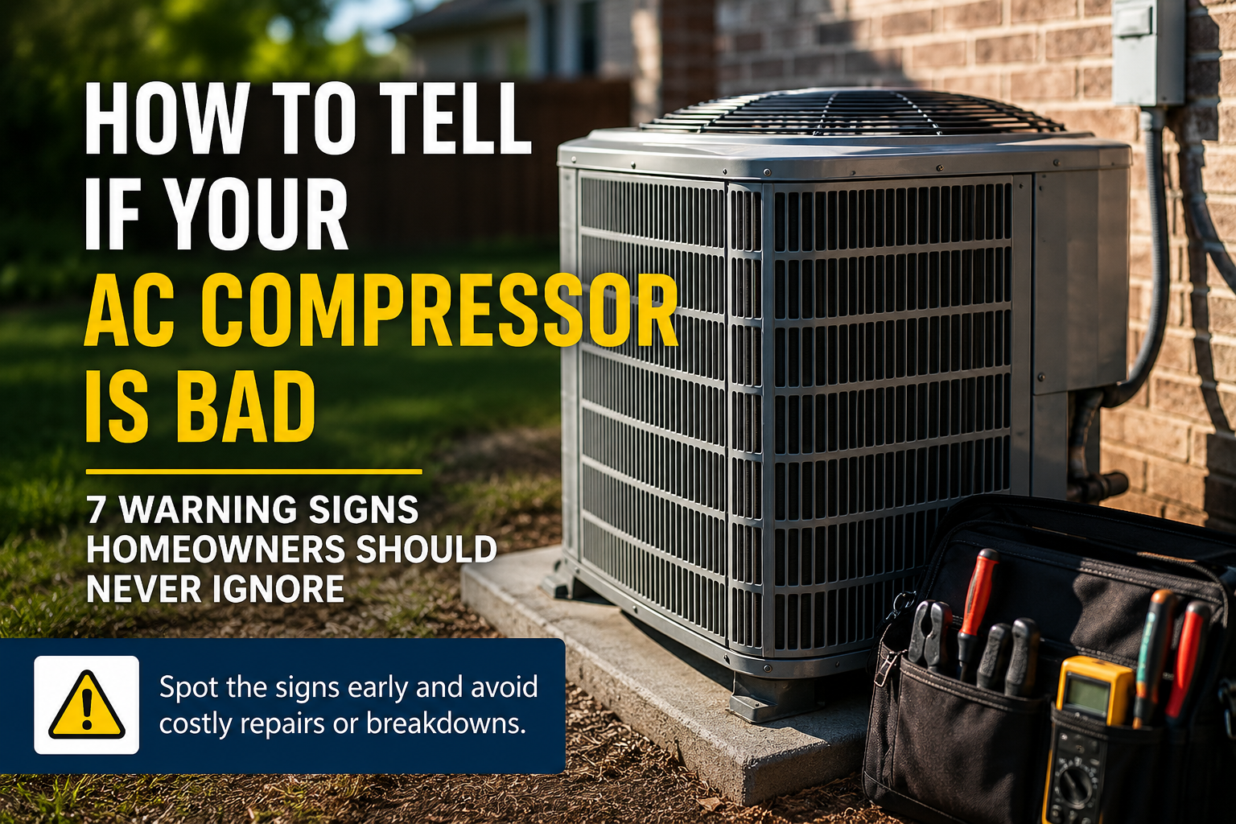
When your air conditioner stops keeping your home cool during a blazing North Texas summer, the compressor is often one of the first components homeowners worry about. But how can you tell if the AC compressor is actually failing, or if another issue is causing the problem?
The compressor is often called the “heart” of your air conditioning system because it circulates refrigerant between the indoor and outdoor components, allowing heat to be removed from your home. When it begins to fail, your system’s performance can decline quickly, especially during periods of extreme heat.
In this guide, the air conditioning professionals at Republic Home Services explain the most common signs of a bad compressor, what causes compressor failures, whether AC repairs are possible, and when replacement may be the better investment.
Key Takeaways:
- The most common signs of a failing AC compressor include warm air from vents, weak cooling performance, unusual noises, frozen refrigerant lines, excessive outdoor unit vibration, and repeatedly tripped circuit breakers.
- AC compressors typically last 10–15 years, though North Texas heat and heavy summer usage can shorten their lifespan.
- Issues such as refrigerant leaks, dirty coils, electrical problems, and lack of maintenance are among the leading causes of compressor failure.
- While homeowners can perform basic troubleshooting like changing air filters and checking thermostat settings, compressor repairs should always be handled by a licensed HVAC professional.
- In many cases, repairing a compressor makes sense for newer systems, while replacing the entire AC system may be more cost-effective for units nearing the end of their lifespan.
- Prompt diagnosis and repair can help prevent additional damage, restore comfort faster, and potentially save thousands in future repair or replacement costs.
What Does an AC Compressor Do?
The compressor is located inside your outdoor air conditioning unit. Its job is to compress and circulate refrigerant throughout the cooling system.
As refrigerant moves through your AC system, it absorbs heat from inside your home and releases it outdoors. Without a properly functioning compressor, this heat transfer process cannot occur efficiently, leaving your home uncomfortable and placing strain on other system components.
Because the compressor works harder than almost any other part of your cooling system, it naturally experiences wear and tear over time.
Most Common Signs Your AC Compressor May Be Failing
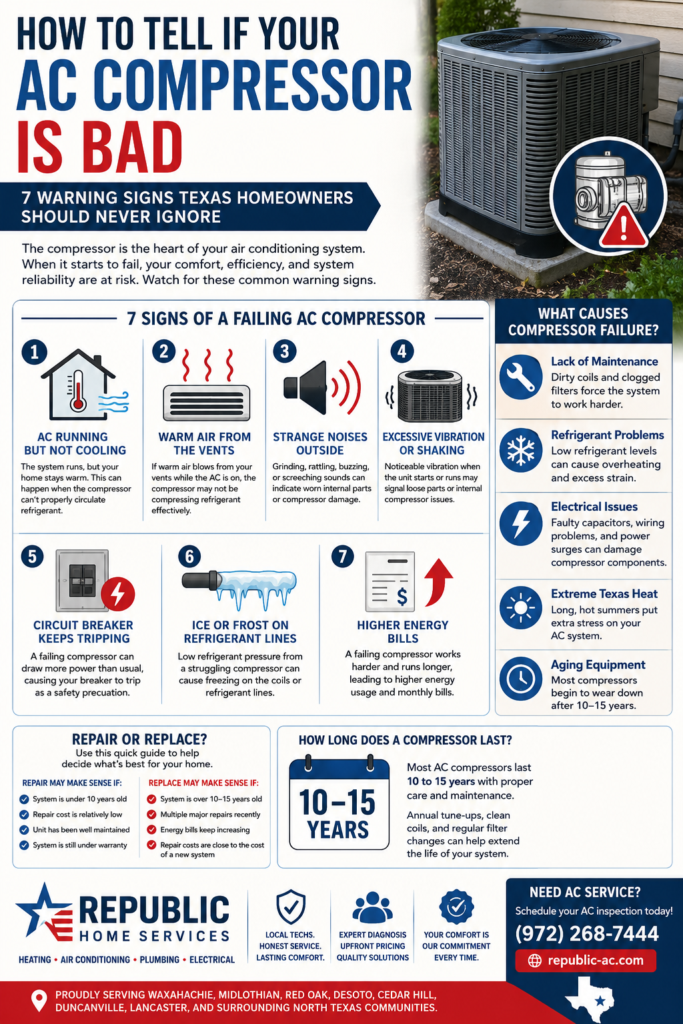
Your AC Is Running But the House Isn’t Cooling
One of the most common compressor-related symptoms is an air conditioner that appears to be operating normally but fails to lower indoor temperatures.
You may hear the system running, feel airflow from the vents, and see the thermostat calling for cooling, yet your home remains warm.
When the compressor cannot properly circulate refrigerant, the cooling cycle becomes ineffective and your AC loses its ability to remove heat from your home.
Warm Air Is Coming From Your Vents
If your thermostat is set to cool but warm air is coming from the vents, the compressor may be struggling to perform its job.
While this symptom can also be caused by low refrigerant levels, electrical issues, or airflow restrictions, compressor failure is often one of the potential causes that should be investigated by a professional.
The longer this issue persists, the harder your system will work to reach the desired temperature.
Strange Noises Are Coming From the Outdoor Unit
Air conditioners naturally produce some operational noise, but sudden or unusual sounds should never be ignored.
Potential warning signs include:
- Grinding noises
- Rattling sounds
- Buzzing
- Screeching
- Clanking
- Clicking
These sounds may indicate worn internal components, failing bearings, loose parts, electrical problems, or compressor damage.
Early diagnosis can often prevent more expensive repairs later.
The Outdoor Unit Vibrates Excessively During Startup
Many homeowners notice compressor problems first when the outdoor unit begins shaking or vibrating more aggressively than normal.
Excessive vibration can occur due to:
- Loose internal components
- Motor problems
- Failing compressor mounts
- Damaged fan assemblies
- Internal compressor failure
If your outdoor unit suddenly sounds or feels noticeably different when starting, it’s worth having it inspected.
Your Circuit Breaker Keeps Tripping
An air conditioner that repeatedly trips the breaker should never be ignored.
As compressors age or begin failing, they may draw more electrical current than normal. When this happens, the breaker trips as a safety mechanism to prevent overheating and electrical damage.
Repeatedly resetting the breaker without addressing the underlying issue can lead to further equipment damage and potential safety concerns.
Ice or Frost Forms on Refrigerant Lines
Frozen refrigerant lines are often associated with airflow issues, but compressor problems can also contribute.
When refrigerant pressures become unbalanced due to compressor failure, temperatures within the system can drop below normal operating ranges, causing ice formation.
You may notice:
- Frost on refrigerant lines
- Ice accumulation near the outdoor unit
- Frozen evaporator coils
- Reduced airflow
If ice is present, turn the system off and schedule service as soon as possible.
Your Energy Bills Suddenly Increase
A failing compressor often has to work harder and run longer to produce the same amount of cooling.
This increased workload can cause:
- Longer cooling cycles
- Reduced efficiency
- Higher energy consumption
- Increased utility costs
If your electricity bills have risen significantly without major changes in weather or usage habits, your cooling system may be losing efficiency due to compressor-related issues.
What Causes AC Compressors to Fail?
Several factors can shorten the lifespan of an air conditioner compressor.
Lack of Routine Maintenance
Regular maintenance helps keep refrigerant pressures, airflow, and electrical components operating properly.
Neglected systems experience more stress, which can accelerate compressor wear.
Refrigerant Leaks
Low refrigerant levels force the compressor to work harder than designed.
Over time, this added strain can lead to overheating and premature failure.
Dirty Condenser Coils
When outdoor coils become covered in dirt, debris, grass clippings, or cottonwood, heat cannot escape efficiently.
This forces the compressor to operate longer and at higher temperatures.
Electrical Problems
Power surges, damaged wiring, failing capacitors, and voltage fluctuations can all damage compressor components.
Extreme Texas Heat
North Texas summers place significant demand on air conditioning systems.
Long cooling cycles during periods of high temperatures can increase wear on compressors, especially in older equipment.
Aging Equipment
Most compressors naturally wear out over time.
As systems approach 10 to 15 years of age, major component failures become more common.
Can You Repair an AC Compressor Yourself?
In most cases, no.
Compressor repairs should always be handled by trained HVAC professionals due to the risks involved.
DIY compressor repair can expose homeowners to:
- Electrical shock
- Refrigerant exposure
- Equipment damage
- Voided manufacturer warranties
However, there are a few basic troubleshooting steps homeowners can safely perform:
- Check thermostat settings
- Replace thermostat batteries
- Change dirty air filters
- Verify breakers haven’t tripped
- Remove debris around the outdoor unit
- Ensure vents are open and unobstructed
If problems continue after these checks, professional diagnosis is recommended.
How Long Does an AC Compressor Last in Texas?
Most residential AC compressors last between 10 and 15 years.
Several factors influence lifespan, including:
- System quality
- Installation quality
- Maintenance history
- Frequency of use
- Local climate conditions
In North Texas, extended cooling seasons and extreme summer temperatures can place additional strain on HVAC equipment, making regular maintenance especially important.
Homeowners who schedule annual AC tune-ups often experience fewer major repairs and longer system life.
How Much Does AC Compressor Repair or Replacement Cost?
The cost of compressor repairs varies depending on:
- System size
- Equipment brand
- Warranty coverage
- Extent of damage
- Availability of replacement parts
Because the compressor is one of the most expensive components in an air conditioning system, replacement costs can be substantial.
For older units, investing in a new high-efficiency air conditioner may provide greater long-term value than replacing the compressor alone.
A professional evaluation can help determine which option makes the most financial sense.
Should You Repair or Replace a Bad AC Compressor?
The answer depends on several factors.
Repair may be the better choice if:
- The system is less than 10 years old
- Warranty coverage is available
- The repair is relatively minor
- The system has a strong maintenance history
Replacement may make more sense if:
- The system is over 10-15 years old
- Multiple major repairs have occurred recently
- Energy bills continue to rise
- Repair costs approach a significant percentage of replacement costs
At Republic Home Services, we help homeowners evaluate both options honestly so they can make informed decisions based on comfort, reliability, and long-term value.
Why Homeowners Trust Republic Home Services for AC Repairs
When an air conditioner stops working during a Texas summer, accurate diagnosis matters.
Many symptoms that appear to be compressor failures can actually be caused by other issues such as electrical problems, refrigerant leaks, clogged coils, or failing capacitors. That’s why our technicians perform comprehensive system evaluations before recommending repairs or replacement.
Our team provides:
- Professional AC diagnostics
- Air conditioner repairs
- AC compressor evaluations
- Preventative maintenance
- System replacement recommendations
- Emergency cooling services
- We believe homeowners deserve clear explanations, honest recommendations, and solutions that prioritize long-term comfort.
Frequently Asked Questions
Can a bad AC compressor be repaired?
Some compressor-related issues can be repaired, but internal compressor failure often requires compressor replacement or full system replacement.
What happens when an AC compressor goes bad?
The system may stop cooling properly, blow warm air, make unusual noises, trip breakers, or fail to start.
Is replacing an AC compressor worth it?
It depends on the age and condition of the system. Newer systems often benefit from compressor replacement, while older units may be better candidates for full replacement.
How long does an AC compressor last?
Most compressors last between 10 and 15 years when properly maintained.
Can a bad compressor cause high electric bills?
Yes. A struggling compressor often consumes more energy as it works harder to cool your home.
Schedule AC Repair With Republic Home Services
If your air conditioner is showing signs of compressor trouble, don’t wait until a complete breakdown leaves your family without cooling.
The experienced HVAC team at Republic Home Services provides expert AC diagnostics, repairs, maintenance, and replacement services throughout Waxahachie, Midlothian, Red Oak, DeSoto, Cedar Hill, Duncanville, Lancaster, and surrounding North Texas communities.
Contact Republic Home Services today to schedule an AC inspection and get your cooling system back to peak performance.