
 24/7 365 days a year!
 Schedule
 +500 Positive Reviews
Why Your AC Drain Line Keeps Clogging (and How to Prevent Water Damage in Your Texas Home)
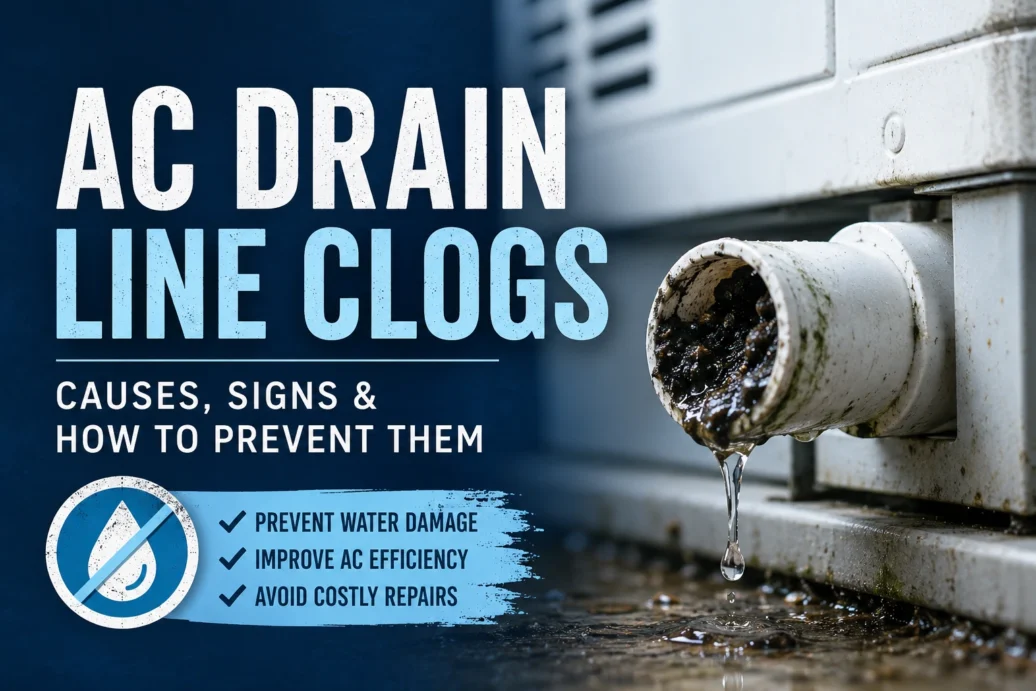
Most homeowners don’t think about their air conditioner’s condensate drain line until water starts appearing where it shouldn’t. Whether you notice a puddle around your indoor unit, a musty odor in your home, or your air conditioner suddenly stops running, a clogged AC drain line is often the culprit. While many clogs can be prevented with routine maintenance, recurring blockages usually indicate a larger problem that needs professional attention.
In this guide, we’ll explain why AC drain lines clog, how to recognize the warning signs, what you can safely check yourself, and when it’s time to call Republic Home Services for expert ac repair.
Key Takeaways
- Your AC drain line removes condensation created during cooling.
- Algae, mold, dirt, and debris are the most common causes of drain line clogs.
- Water leaks, musty odors, and overflowing drain pans are early warning signs.
- Ignoring a clog can lead to ceiling damage, mold growth, and unexpected AC shutdowns.
- Annual HVAC maintenance is the best way to prevent recurring drain line problems.
What Does an AC Drain Line Do?
As your air conditioner cools your home, it also removes humidity from the indoor air.
That moisture condenses on the evaporator coil and drains into a condensate pan before flowing outside through the condensate drain line.
When the drain line becomes blocked, water has nowhere to go.
Instead, it backs up into the drain pan, leaks into your home, or triggers a safety switch that shuts the system down to prevent water damage.
Why Does My AC Drain Line Keep Clogging?
If your AC drain line clogs repeatedly, the blockage usually isn’t random. Several factors work together to create buildup inside the pipe.
Algae and Mold Growth
The drain line is dark, damp, and warm—ideal conditions for algae, mold, mildew, and biofilm to grow.
Over time, these organisms narrow the pipe until water can no longer flow freely.
Dirt and Dust
Even with a clean air filter, some dust eventually reaches your evaporator coil.
When condensation washes debris into the drain line, it combines with moisture to create sludge that gradually blocks drainage.
Dirty Air Filters
Restricted airflow causes the evaporator coil to become colder than normal.
As ice forms and later melts, the system produces excess water that can overwhelm a partially restricted drain line.
High Humidity
Texas summers bring extended periods of high humidity.
The more humidity your AC removes from the air, the more condensate flows through the drain line, increasing the likelihood that existing buildup will create a blockage.
Lack of Preventive Maintenance
Without regular HVAC tune-ups, small amounts of algae and debris accumulate year after year until drainage problems become frequent.
Warning Signs Your AC Drain Line Is Clogged
Many homeowners notice symptoms long before they realize the drain line is blocked.
Watch for:
- Water leaking around the indoor air handler
- Standing water in the condensate pan
- Musty or mildew odors when the AC runs
- Water stains on ceilings or walls near the indoor unit
- Higher indoor humidity
- Your air conditioner suddenly shutting off
- Reduced cooling performance
Catching these warning signs early can help prevent costly water damage.
Can You Fix a Clogged AC Drain Line Yourself?
Some minor clogs can be addressed safely by homeowners.
Before calling for service, you can:
- Turn off power to the air conditioner.
- Inspect the drain pan for standing water.
- Replace a dirty HVAC air filter.
- Check the outdoor drain line outlet for visible debris.
- Look for obvious algae buildup around the pipe opening.
Avoid inserting sharp objects into the drain line or using harsh chemicals, which can damage PVC piping or internal components.
If the clog returns shortly after cleaning, there’s likely a larger issue that requires professional equipment.
Why Does My Drain Line Keep Clogging After I Clean It?
If you’ve cleared the line only to have it clog again a few weeks later, the underlying problem hasn’t been solved.
Recurring blockages are often caused by:
- Biofilm growing deeper inside the pipe
- Partial clogs that weren’t fully removed
- Improper drain line slope
- Excessive moisture production
- Dirty evaporator coils
- Airflow problems caused by neglected maintenance
Professional cleaning removes the entire blockage while also identifying why the clog keeps returning.
What Happens If You Ignore a Clogged Drain Line?
Many homeowners underestimate how much damage a clogged condensate drain can cause.
Ignoring the problem can lead to:
Water Damage
Overflowing condensate can damage drywall, ceilings, flooring, insulation, and cabinetry.
Mold Growth
Persistent moisture creates ideal conditions for mold around your HVAC system and inside wall cavities.
System Shutdown
Many modern air conditioners include a float switch that automatically turns the system off when the drain pan fills with water.
While this safety feature protects your home, it also leaves you without cooling until the issue is repaired.
Costlier Repairs
What begins as a simple maintenance issue can eventually result in expensive repairs if water damages HVAC components or surrounding building materials.
When Should You Call an HVAC Professional?
Schedule professional AC service if:
- Water continues leaking after you’ve replaced the filter.
- The drain line clogs repeatedly.
- Your system keeps shutting off unexpectedly.
- You notice mold or strong musty odors.
- Water is approaching electrical equipment.
- You’re unable to locate the blockage.
Professional service includes clearing the drain line completely while inspecting the entire condensate system for contributing issues.
Why North Texas Homes Experience More Drain Line Problems
Homeowners throughout Waxahachie, Red Oak, Midlothian, Cedar Hill, DeSoto, Duncanville, Lancaster, and surrounding North Texas communities often experience clogged condensate lines during the hottest months of the year.
Long cooling cycles, elevated humidity, and heavy summer AC use mean your system removes gallons of moisture from the air every day. That constant condensation increases the likelihood of algae growth and debris buildup inside the drain line.
Routine maintenance becomes especially important during the long Texas cooling season.
How Routine HVAC Maintenance Helps Prevent Drain Line Clogs
The easiest way to avoid unexpected drain line problems is through annual air conditioning maintenance.
During a maintenance visit, a Republic Home Services technician can:
- Flush the condensate drain line
- Remove algae and biological growth
- Clean the condensate pan
- Inspect the evaporator coil
- Test the float safety switch
- Verify proper drainage
- Check refrigerant levels and overall system performance
Preventive maintenance helps reduce emergency repairs while improving efficiency and extending the life of your air conditioner.
Keep Your AC Running Reliably This Summer
A clogged AC drain line may seem like a small issue, but it can quickly lead to water damage, mold growth, and unexpected cooling problems if left untreated.
If your AC drain line keeps clogging or you’ve noticed water around your indoor unit, Republic Home Services can identify the underlying cause and restore proper drainage before the problem gets worse.
Our experienced HVAC technicians provide comprehensive AC repair, maintenance, and cooling system inspections throughout North Texas, helping homeowners stay comfortable even during the hottest summer months.
Frequently Asked Questions
Why does my AC drain line keep clogging?
Most recurring clogs are caused by algae, mold, dust, or debris building up inside the condensate drain line over time. Poor airflow and neglected maintenance can make the problem worse.
Can a clogged AC drain line cause my AC to stop working?
Yes. Many modern air conditioners have a float safety switch that automatically shuts the system down when the drain pan fills with water to help prevent water damage.
Is water leaking from my AC always caused by a clogged drain line?
Not always. Refrigerant issues, frozen evaporator coils, damaged drain pans, or condensate pump failures can also cause water leaks. A professional inspection can determine the exact cause.
How often should an AC drain line be cleaned?
Most systems benefit from having the condensate drain line inspected and cleaned during annual HVAC maintenance. Homes with heavy AC usage or high indoor humidity may require more frequent service.
Can a dirty air filter cause drain line problems?
Yes. A clogged air filter restricts airflow, which can cause the evaporator coil to freeze. When the ice melts, excess condensation can overwhelm the drain system and contribute to clogs.
Is a clogged AC drain line an emergency?
It can be. If water is leaking into your home, the drain pan is overflowing, or water is near electrical components, you should schedule professional service as soon as possible.
How can I help prevent future AC drain line clogs?
Replace your air filter regularly, schedule annual AC maintenance, keep the condensate drain clear, and address water leaks or musty odors as soon as they appear.