

 24/7 365 days a year!
 Schedule
 +500 Positive Reviews
Why Your Water Pressure Is Low and How a Plumber Can Fix It
Experiencing low water pressure can turn everyday tasks like showering, washing dishes, or doing laundry into frustrating, time-consuming chores. While it may seem like a minor inconvenience, water pressure problems are often a sign of underlying plumbing issues that shouldn’t be ignored.
If you’ve found yourself asking, “Why is my water pressure low?” the answer can vary widely depending on your plumbing system, home age, and even local infrastructure. We’ll explore the most common causes, how professionals diagnose the issue, and how a plumber for low water pressure can restore proper flow.
What Is Considered Low Water Pressure?
Water pressure in residential homes is typically measured in pounds per square inch (PSI), with most systems designed to operate between 40 and 60 PSI. Low water pressure in the house is considered to occur when the pressure drops below this range, and the impact becomes noticeable in everyday use.
In practical terms, this often shows up as weak flow from faucets and showerheads, longer appliance cycle times, or inconsistent pressure when multiple fixtures are used at once. While these issues may seem minor at first, they are often early indicators of broader plumbing water-pressure issues that should be evaluated.
According to the U.S. Environmental Protection Agency (EPA) WaterSense program, efficient fixtures are designed to work within standard pressure ranges, meaning persistent low pressure often indicates a system issue rather than fixture inefficiency.
Common Causes of Low Water Pressure
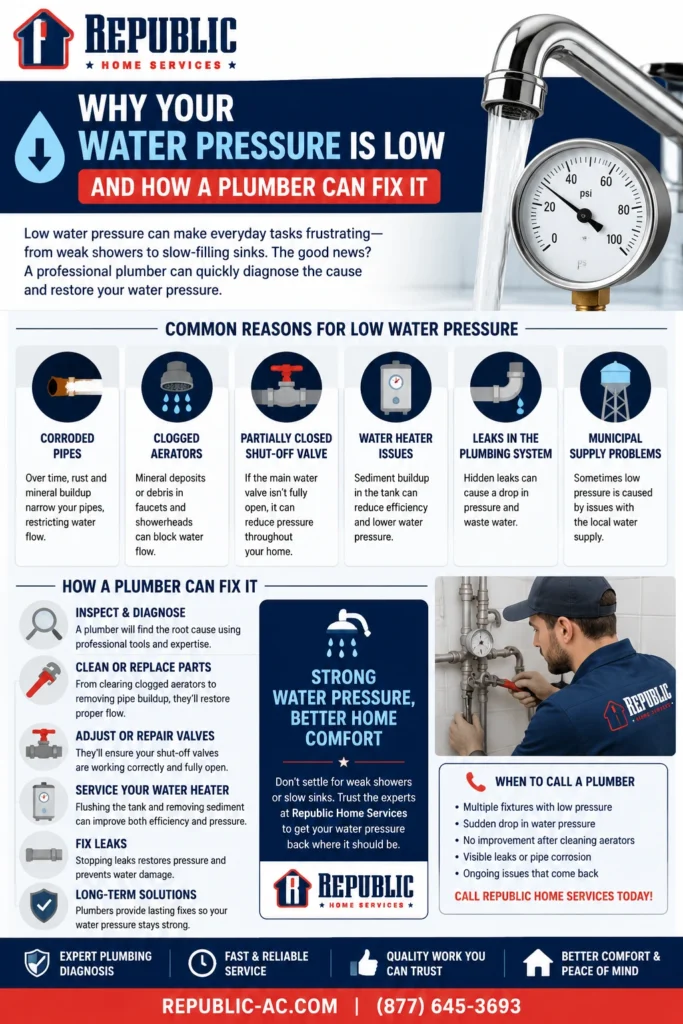
Understanding the causes of low water pressure is essential before attempting any repairs, because issues can range from simple blockages to more serious structural plumbing failures.
Clogged pipes or mineral buildup
Clogged pipes can cause low water pressure due to mineral buildup, especially in areas with hard water. Over time, sediment accumulates inside pipes, narrowing the passage for water flow.
Similar to plaque buildup in arteries, mineral buildup gradually restricts water flow over time, reducing performance.
Professional drain cleaning services can help clear blockages and restore pressure.
Plumbing leaks
Leaking pipes and low pressure are also common. Even small leaks divert water away from fixtures, reducing overall system pressure. This is especially important to consider if you notice sudden drops in pressure, damp spots or mold, or increased water bills.
Professional water leak detection services can identify hidden leaks, including those behind walls or underground. In more severe cases, slab leak detection may be required to look for leaks in water pipes running beneath your home’s foundation.
Watch for early signs of water leaks, like higher water bills, damp spots, musty odors, unusual water sounds, or reduced pressure. These often indicate hidden leaks and should be addressed before they lead to costly damage.
Corroded pipes
Older homes often have galvanized steel pipes that corrode internally over time. This corrosion restricts water flow and contributes to long-term plumbing water pressure issues.
In these cases, temporary fixes are rarely effective. A more permanent solution often involves repiping the house, replacing outdated pipes with modern materials like PEX or copper.
Pressure regulator problems
Many homes have a pressure regulator that controls incoming water pressure. When this component fails, it can result in either extremely high or very low pressure.
Pressure regulator problems are often identified by:
- Sudden system-wide pressure changes
- Inconsistent flow throughout the home
A plumber will test and adjust or replace the regulator as needed.
Municipal water supply issues
Sometimes the problem originates outside your home. Local infrastructure issues, maintenance work, or peak usage times can all impact supply pressure.
If neighbors are experiencing similar problems, the issue may be municipal rather than internal. In these cases, a plumber can confirm the source and, if needed, recommend solutions such as booster systems.
Partially closed shut-off valves
This is one of the simplest — and most overlooked — causes of low water pressure. If a main shut-off valve is not fully open, it restricts water flow into your home.
Make sure your valves are fully open after any plumbing repairs or maintenance work.
Why Low Water Pressure Shouldn’t Be Ignored
Although low water pressure is often dismissed as a minor inconvenience, it frequently points to deeper problems within the plumbing system. Issues such as hidden leaks, internal pipe buildup, or failing components can worsen over time if not addressed.
What begins as a slight drop in pressure can escalate into more serious complications, including pipe damage, water waste, and higher repair costs. In some cases, unresolved pressure issues escalate into urgent situations requiring immediate emergency plumbing services, particularly when leaks or pipe failures are involved.
How Plumbers Diagnose Low Water-Pressure Problems
Diagnosing water pressure problems requires more than a surface-level inspection. A professional plumber will take a systematic approach to identify the root cause and avoid unnecessary repairs.
This process typically begins with measuring water pressure at multiple points throughout the home to determine whether the issue is localized or system-wide. From there, the plumber will inspect visible plumbing components, evaluate fixture performance, and check for signs of leaks or pressure inconsistencies. In many cases, additional tools are used to assess the internal condition of pipes, especially when corrosion or sediment buildup in the pipes is suspected.
This structured approach directly addresses the underlying issue, rather than temporarily masking symptoms.
How a Plumber Can Fix Low Water Pressure
Often, plumbers resolve low water pressure by clearing sediment buildup in pipes through system flushing or targeted cleaning to restore proper flow.
If leaking pipes and low pressure are the problem, they will locate the damaged section and carry out precise repairs or replacements to prevent further water loss. For homes experiencing pressure regulator problems, adjusting or replacing the regulator can stabilize pressure across the system. In older properties with ongoing plumbing water-pressure issues, a more comprehensive approach, such as partial or full repiping, may be recommended to eliminate long-term restrictions caused by corrosion or narrowing pipes.
Homeowners looking for a complete solution can explore full-service plumbing support, which typically includes inspection, diagnostics, repair, and system upgrades designed to address both immediate pressure concerns and the underlying condition of the plumbing system.
DIY Troubleshooting Tips Homeowners Can Try First
Before calling a professional, there are a few simple checks you can perform:
- Clean faucet aerators and shower heads
- Check that shut-off valves are fully open
- Test water pressure using a gauge
If these steps do not resolve the issue, a professional diagnosis is recommended.
Why Texas Homes Often Experience Water-Pressure Issues
Homes in Texas are more prone to low water pressure in the house due to a combination of environmental factors. Hard water is a primary contributor, as mineral content leads to gradual sediment buildup in pipes, restricting flow over time and reducing pressure across fixtures.
Soil conditions also play a role. Expansive clay soil can shift with moisture changes, placing stress on underground pipes and increasing the risk of cracks or hidden leaks, which often result in leaking pipes and low-pressure issues.
In addition, temperature fluctuations can weaken plumbing connections over time, contributing to ongoing plumbing water-pressure issues. Together, these factors make pressure problems more common and reinforce the need for regular inspection and maintenance.
When to Call a Plumber
It’s important to contact a professional when low water pressure points to a larger system issue rather than a simple fixture problem. If the pressure drop affects the entire home, it typically indicates a broader issue such as a leak, blockage, or failing component within the plumbing system.
Sudden changes in pressure are another warning sign, often linked to pipe damage or active leaks. Even without visible water, signs such as higher bills or persistent low flow can be early indicators of a problem.
When basic troubleshooting does not resolve the issue, a qualified plumber for low water pressure can diagnose the root cause and complete the necessary water-pressure repair to restore proper function.
How much does it cost to fix low water pressure?
Costs vary depending on the cause and severity of the issue. For example:
- Minor fixes (cleaning fixtures): Relatively low cost
- Leak detection and repair: Moderate cost
- Repiping projects: Higher investment but long-term solution
The key is early intervention. Addressing low water pressure early is typically far more cost-effective than waiting for larger system failures.
Schedule a Plumbing Inspection with Republic Home Services
Republic Home Services provides comprehensive plumbing support across Red Oak and the greater Dallas–Fort Worth area.
Backed by more than 50 years of industry experience and a strong focus on customer education and transparent service, we take a full-system approach, offering detailed evaluations, multiple repair options, and clear guidance so you can make informed decisions about your plumbing systems 24/7.
Contact us today to schedule your next service or for any emergency needs. We’re here to help.