

 24/7 365 days a year!
 Schedule
 +500 Positive Reviews
What Type of AC Is Best for Two-Story Homes in Texas?
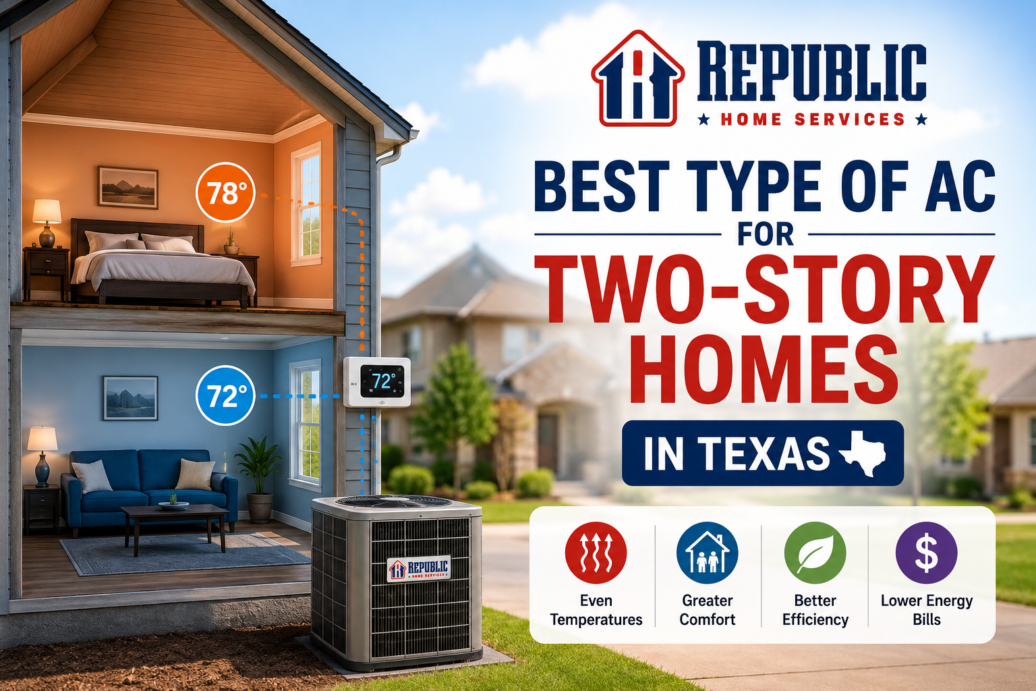
If you own a two-story home, you’ve probably experienced a common problem: the upstairs feels hot while the downstairs feels perfectly comfortable—or even too cold. Many homeowners assume they need a larger air conditioner, but the reality is that the best AC system for a two-story home depends on your home’s layout, insulation, ductwork, and cooling demands. In many cases, airflow and temperature control matter more than simply increasing system size.
At Republic Home Services, we frequently help homeowners solve uneven cooling issues in multi-story homes throughout Texas. Understanding your options can help you choose a system that delivers consistent comfort, lower energy costs, and reliable performance for years to come.
Why Two-Story Homes Are More Difficult to Cool
Two-story homes naturally present unique cooling challenges.
Warm air rises, causing second-floor rooms to retain more heat during the summer. Sun exposure on upper levels, attic heat gain, and longer duct runs can further increase temperature differences between floors. As a result, many homeowners find themselves lowering the thermostat just to make upstairs bedrooms comfortable, which often leads to overcooling downstairs and higher utility bills.
Common signs your current system isn’t meeting your home’s needs include:
- Upstairs rooms consistently feel warmer than downstairs.
- Certain bedrooms never seem comfortable.
- Your AC runs for long periods without reaching the desired temperature.
- Energy bills continue to increase during the cooling season.
- Humidity levels feel higher on the second floor.
Best AC Options for Two-Story Homes
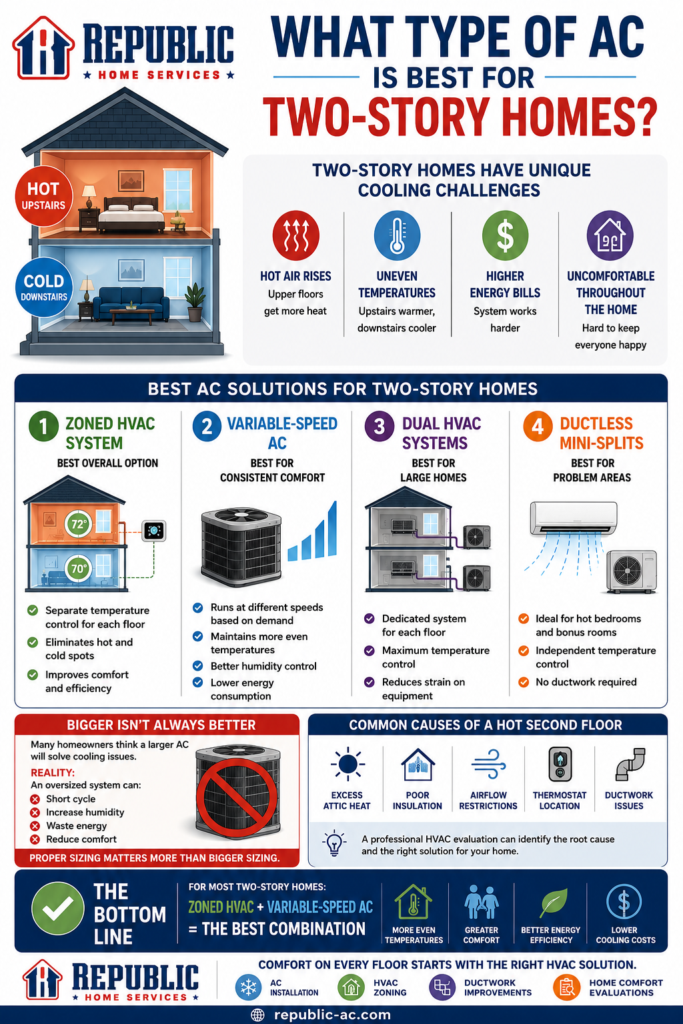
1. Zoned HVAC Systems (Best Overall)
For many two-story homes, a zoned HVAC system offers the most effective solution.
Zoning divides your home into separate cooling areas—typically one zone for the first floor and another for the second floor. Each zone has its own thermostat, allowing temperatures to be controlled independently. Motorized dampers inside the ductwork direct conditioned air where it’s needed most.
Benefits of HVAC Zoning
- Individual temperature control for each floor.
- Improved comfort throughout the home.
- Reduced energy waste.
- Less overcooling of downstairs spaces.
- Better management of changing cooling demands throughout the day.
For many homeowners, zoning provides the ideal balance between comfort and efficiency without requiring multiple complete HVAC systems.
2. Variable-Speed Air Conditioning Systems
Variable-speed AC systems are another excellent choice for two-story homes.
Unlike traditional single-stage systems that operate at full power or not at all, variable-speed equipment automatically adjusts output based on your home’s cooling needs. This allows the system to run longer at lower speeds, providing more consistent temperatures and improved humidity control.
Advantages of Variable-Speed AC
- More even temperatures between floors.
- Superior humidity removal.
- Increased energy efficiency.
- Quieter operation.
- Reduced wear and tear on equipment.
When paired with zoning, variable-speed systems can significantly improve comfort in larger two-story homes.
3. Dual HVAC Systems for Larger Homes
In larger homes, installing separate HVAC systems for each floor may provide the best performance.
A dual-system setup typically includes one air conditioner and air handler serving the first floor and another dedicated to the second floor. Each system operates independently, allowing precise temperature control on both levels.
Dual-System Benefits
- Maximum comfort control.
- Independent operation for each floor.
- Better performance in homes over 3,000 square feet.
- Reduced strain on equipment.
While installation costs are higher, dual systems can be an excellent long-term investment for larger or more complex home layouts.
4. Ductless Mini-Split Systems
If your upstairs struggles to stay cool or you have bonus rooms, additions, converted attics, or areas with limited ductwork, a ductless mini-split may be an effective solution.
Mini-splits provide targeted cooling to specific areas without relying on existing ductwork. They also offer independent temperature control for each indoor unit.
Ideal Applications for Mini-Splits
- Finished attics.
- Home additions.
- Bonus rooms.
- Second-floor bedrooms with persistent comfort issues.
- Homes with limited or aging ductwork.
Mini-splits can often solve isolated hot spots without requiring a complete HVAC replacement.
Is a Bigger Air Conditioner the Answer?
Not necessarily.
Many homeowners believe an oversized AC will solve uneven cooling issues, but larger equipment can actually create new problems. Oversized systems tend to cycle on and off too frequently, reducing humidity removal and potentially leading to comfort issues, higher energy consumption, and premature wear.
The key is proper sizing based on a professional load calculation rather than square footage alone. Factors such as insulation levels, windows, orientation, ductwork design, and occupancy all influence the correct system size.
Other Factors That Affect Comfort in Two-Story Homes
Before replacing your air conditioner, it’s important to evaluate other contributors to uneven cooling.
Ductwork Design
Poorly designed, leaking, or undersized ductwork can significantly impact airflow to upstairs rooms. In some cases, duct improvements provide a more cost-effective solution than replacing equipment.
Attic Insulation
Insufficient attic insulation allows heat to transfer into the upper floor, making it more difficult to maintain comfortable temperatures.
Thermostat Placement
Many homes have a single thermostat located downstairs. This can cause the system to shut off before upstairs areas reach the desired temperature. Zoning systems help solve this issue by monitoring temperatures independently on each floor.
So, What Type of AC Is Best for a Two-Story Home?
For most homeowners, a properly designed zoned HVAC system paired with a high-efficiency variable-speed air conditioner offers the best combination of comfort, efficiency, and long-term value. Larger homes may benefit from separate HVAC systems for each floor, while mini-splits can be an excellent solution for isolated problem areas.
The right answer depends on your home’s unique design—not simply its size.
Let Republic Home Services Help You Find the Right Cooling Solution
At Republic Home Services, our experienced HVAC professionals evaluate your home’s layout, ductwork, insulation, and comfort challenges to recommend the most effective cooling solution. Whether you’re considering a new AC installation, zoning upgrade, ductless mini-split, or complete system replacement, we’ll help you find the right fit for your home and budget.
Contact Republic Home Services today to schedule a professional HVAC evaluation and discover how to keep every floor of your home comfortable all summer long.
____________________________________
Frequently Asked Questions About AC Systems for Two-Story Homes
Can One AC Unit Cool a Two-Story Home?
Yes, a single AC unit can effectively cool a two-story home—provided it is properly sized, installed, and supported by a well-designed duct system. However, many two-story homes experience temperature differences between floors because heat naturally rises and upper levels are exposed to more attic heat and solar gain.
If your upstairs is consistently warmer than your downstairs, the issue may not be the air conditioner itself. Problems with airflow, ductwork design, insulation, thermostat placement, or system sizing can all contribute to uneven temperatures. In many cases, adding HVAC zoning or upgrading to a variable-speed system can significantly improve comfort throughout the home.
What Size AC Do I Need for a Two-Story Home?
The right AC size depends on much more than square footage alone. Factors such as ceiling height, insulation levels, window efficiency, home orientation, occupancy, and local climate all affect cooling requirements.
A professional HVAC contractor should perform a Manual J load calculation to determine the correct system size for your home. Installing an undersized unit can leave your home uncomfortable during peak summer temperatures, while an oversized unit may short cycle, increase humidity levels, and waste energy.
For Texas homeowners, proper sizing is especially important due to the long cooling season and extreme summer heat.
Why Does My Second Floor Get So Hot in Summer?
Several factors can cause second-floor rooms to feel significantly warmer than the first floor:
- Heat naturally rises and accumulates upstairs.
- Attic temperatures can exceed 130°F during the summer.
- Inadequate attic insulation allows heat to transfer into living spaces.
- Poor ductwork design can limit airflow to upper-floor rooms.
- Sunlight entering through upstairs windows increases heat gain.
- A single thermostat located downstairs may shut the system off before the second floor reaches the desired temperature.
A professional HVAC inspection can identify the root cause and determine whether improvements such as zoning, insulation upgrades, duct modifications, or a new AC system are needed.
Can a New AC System Fix Uneven Cooling?
It can—but not always by itself.
If your current air conditioner is aging, improperly sized, or operating inefficiently, a new system may improve temperature consistency throughout your home. However, uneven cooling is often caused by multiple factors, including ductwork restrictions, insufficient insulation, air leaks, or thermostat placement.
The most effective solution is a comprehensive evaluation of your home’s entire comfort system. In many cases, homeowners achieve the best results by combining a new high-efficiency air conditioner with zoning controls, ductwork improvements, or insulation upgrades.
Is a Zoned HVAC System Worth It for a Two-Story Home?
For many homeowners, yes. A zoned HVAC system allows each floor to have its own thermostat and temperature settings, helping eliminate common hot and cold spots. Instead of cooling the entire home to satisfy the warmest room, zoning directs conditioned air where it’s needed most.
Benefits of zoning include:
- More consistent temperatures between floors
- Greater comfort for family members with different preferences
- Improved energy efficiency
- Reduced strain on HVAC equipment
- Better control over cooling costs
Zoning is often one of the most effective upgrades for homes that struggle with uneven temperatures.
How Can I Improve Upstairs Cooling Without Replacing My AC?
Before investing in a new air conditioner, consider these potential improvements:
- Add or upgrade attic insulation
- Seal air leaks around windows and doors
- Have your ductwork inspected for leaks or restrictions
- Adjust dampers to improve airflow distribution
- Install ceiling fans to improve air circulation
- Consider a zoning system or ductless mini-split for problem areas
- Schedule professional HVAC maintenance to ensure optimal performance
In many cases, these upgrades can significantly improve comfort while extending the life of your existing system.
How Often Should an AC System Be Replaced in a Two-Story Home?
Most central air conditioning systems last between 10 and 15 years with proper maintenance. If your system is older, requires frequent repairs, struggles to keep both floors comfortable, or causes rising energy bills, it may be time to consider replacement.
A professional evaluation can help determine whether repairs, upgrades, or a complete system replacement will provide the best long-term value for your home.