
 24/7 365 days a year!
 Schedule
 +500 Positive Reviews
Why Does My Furnace Smell Like It’s Burning When I Turn It On?
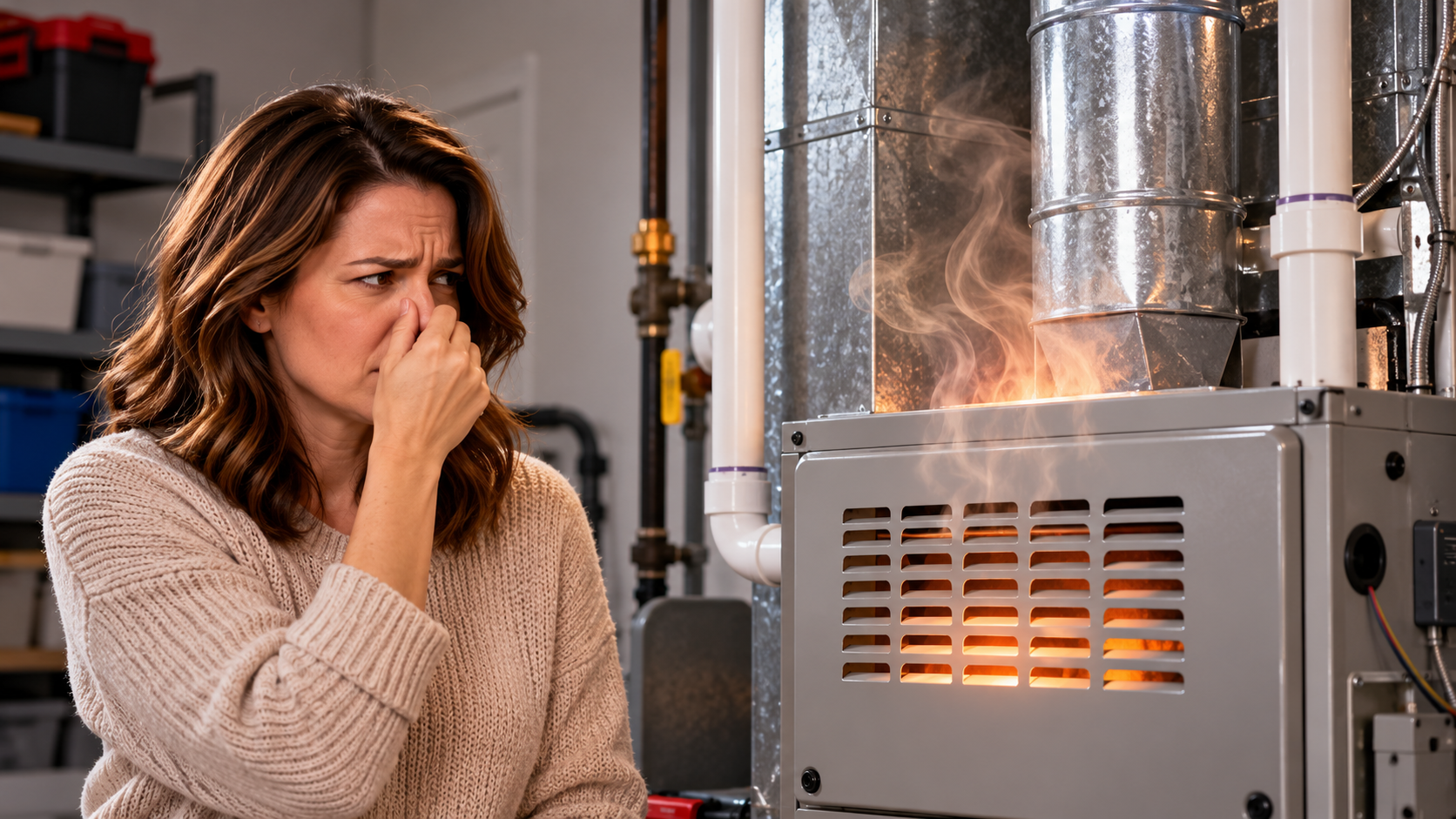
When the first cold night arrives in North Texas, many homeowners rush to turn on their heat for the first time since spring. But after a few minutes, the house smells like it’s burning and you start to wonder if something’s wrong. Most of the time, it’s simply dust that collects on the furnace over the summer burning off, and it fades on its own.
Sometimes, though, a burning smell can signal a more serious issue. If the smell doesn’t go away after an hour or two, it’s worth a deeper look to rule out an electrical or overheating problem. In this guide, we’ll help you tell the difference, walk you through a few checks you can do yourself, and explain when it’s time to give our team a call.
Why Does My Furnace Smell Like It’s Burning?
Many homeowners find themselves asking, “Why does my furnace smell?” after turning their heating system on for the first time in a while. A burning smell usually means something inside or near your furnace is getting hotter than it should or sitting where it shouldn’t be.
Furnaces in Ellis and Dallas counties often sit unused for five or six months every year, so dust is the most common cause. If the smell lingers or seems different from a dusty odor, one of these issues could be the reason your furnace smells burnt.
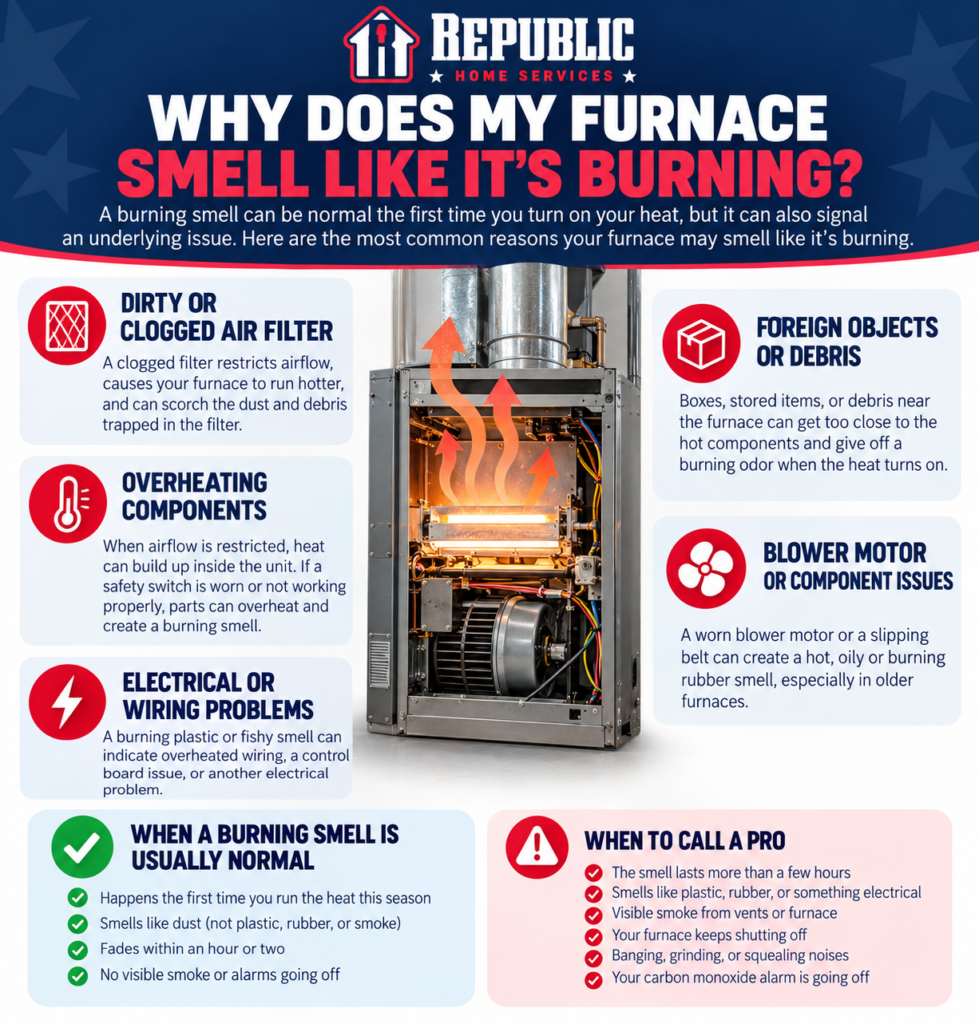
Dirty or clogged air filter
Air filters can get packed with dust, pet hair, and pollen that restrict the airflow your furnace needs to run safely. Your system starts running hotter than it was designed to, and the debris trapped in the filter can start to scorch.
Overheating components
When air can’t move through your furnace freely, the heat stays inside the unit. A safety switch is supposed to shut the burners off before things get too hot, but if that switch is worn or the airflow problem keeps coming back, parts can overheat and give off a burning smell.
Electrical or wiring problems
An electrical burning odor often smells different from a furnace burning dust. Some notice their furnace smells like burning plastic, and others describe an odd fishy odor. Either one can mean wiring insulation, a control board, or another electrical part is overheating.
Foreign objects or debris
Many furnaces sit in garages or hall closets, where boxes and other belongings get pushed up against the unit over the summer. Once the heat turns on, the items touching the system can warm up and give off a burning odor.
Blower motor or component issues
The blower motor pushes warm air through your ducts to heat your home. As it ages, its bearings can wear out and the motor can overheat, which creates a hot, oily smell. Older furnaces that use a belt-driven blower can also give off a burning rubber smell when the belt slips or starts to fray.
Burning Dust: A Common First-Use Furnace Smell
It’s common for dust to settle on the burners and heat exchanger while your furnace sits unused through a long Texas summer. When the burners light up for the first time in the fall, it burns off, and your furnace starts to smell like burning dust.
Homes with heat pumps can have the same thing happen. Many all-electric homes in areas like Midlothian and Red Oak use electric heat strips as backup heat, which collect dust just like a gas furnace. You’ll often notice the same short-lived burning smell when the heater turns on.
When Is a Burning Smell From Your Furnace Normal?
Thankfully, a burning smell when your furnace first turns on is usually nothing to worry about. It’s most likely just dust burning off if:
- Your furnace smells the first time you run the heat this season.
- It smells dusty, not like plastic, rubber, or smoke.
- Your furnace only smells when you turn it on for the first time.
- You don’t see smoke, and no alarms go off.
Opening a window for a little while can help get rid of the smell faster. If it’s gone by the next heating cycle, there’s no need to worry about it.
Warning Signs the Burning Smell Could Be a Problem
If the smell is different from a typical burning dust and lasts longer than a couple of hours, it’s worth paying closer attention to. Call a technician if you notice:
- A burning smell from your furnace that lasts more than a few hours.
- A melting plastic, fishy, burning rubber, or electrical burning smell from your furnace.
- Visible smoke coming from the vents or furnace.
- Your furnace shutting off quickly after it starts.
- Banging, grinding, or squealing noises along with the smell.
- Your carbon monoxide alarm is going off.
Gas companies add a rotten-egg-like odor to natural gas so you can notice a leak. If the smell coming from your furnace is closer to rotten eggs, immediately evacuate the house and call emergency services from outside. Once they confirm it’s safe to go back in, our team can inspect and repair the furnace.
What to Do When Your Furnace Smells Like It’s Burning
If the burning smell isn’t the normal first-use dust smell, there are a few steps you can take to narrow down the cause:
Step one: Check the air filter. Start by turning off the heat at the thermostat and checking the air filter. Slide it out and hold a light up to it. If you can’t see through it, replace it with a new filter the same size.
Step two: Clear the area. Move boxes, cleaning supplies, laundry, and anything else near the unit at least a few feet away.
Step three: Check the vents. Make sure there aren’t any toys, rugs, or furniture blocking the floor vents and return grilles.
Step four: Turn the heat back on. If the smell was from dust or a dirty filter, it should fade fairly quickly. If it comes back, turn the system off and contact our HVAC professionals.
When to Call for Furnace Repair
If you’ve changed the filter and cleared out the area around the furnace but the burning smell is still there, it’s time to call for repair. You should also call right away if you notice smoke, an electrical smell, or your furnace keeps shutting itself off.
An experienced technician can track down where the smell is coming from, explain what they found, and give you options for repair. Most of these problems can be solved with a thorough cleaning or a minor part replacement, especially when they’re caught early.
How to Help Prevent Furnace Problems
Most burning smells stem from issues you can prevent with proper maintenance. A few habits you can do to keep your furnace running safely include:
- Changing your filter every one to three months.
- Keeping at least a few feet of clear space around your furnace.
- Scheduling a heating inspection in early fall and considering joining a membership plan for routine maintenance.
- Testing your carbon monoxide detectors for proper function every couple of months.
- Keep vents and return grilles open and clear of furniture.
During a fall inspection, a technician cleans away built-up dust, checks electrical connections, and confirms the safety switches work. With a preventative tune-up, you can catch small problems before the first cold night.
Burning Smell Won’t Go Away? Call Republic Home Services
If your furnace smells like it’s burning and the odor isn’t going away, give us a call. Our team is available 24/7 for emergency furnace repair across Ellis and Dallas counties. We’ll find the underlying causes and get your heat running safely again. Don’t forget to ask about our financing plans and special offers that help make furnace services more affordable.
Frequently Asked Questions
How long should a burning smell last when I turn on my furnace?
You should notice a burning smell for no more than about an hour. If the smell lasts longer than a few hours or comes back, have a technician inspect your system.
Is it safe to keep running my heater if it smells like it’s burning?
If it’s the usual dusty smell on the first cold day, you can keep running your furnace. If you smell plastic, rubber, smoke, or something electrical, turn the furnace off and call for service before you use it again.
How often should I have my furnace inspected?
Scheduling an annual inspection in September or October gets your system ready for peak season. Because furnaces in North Texas sit idle more of the year, a fall inspection catches dust buildup and worn parts before temperatures drop.