

 24/7 365 days a year!
 Schedule
 +500 Positive Reviews
Why Does My Water Heater Make Popping or Rumbling Noises?
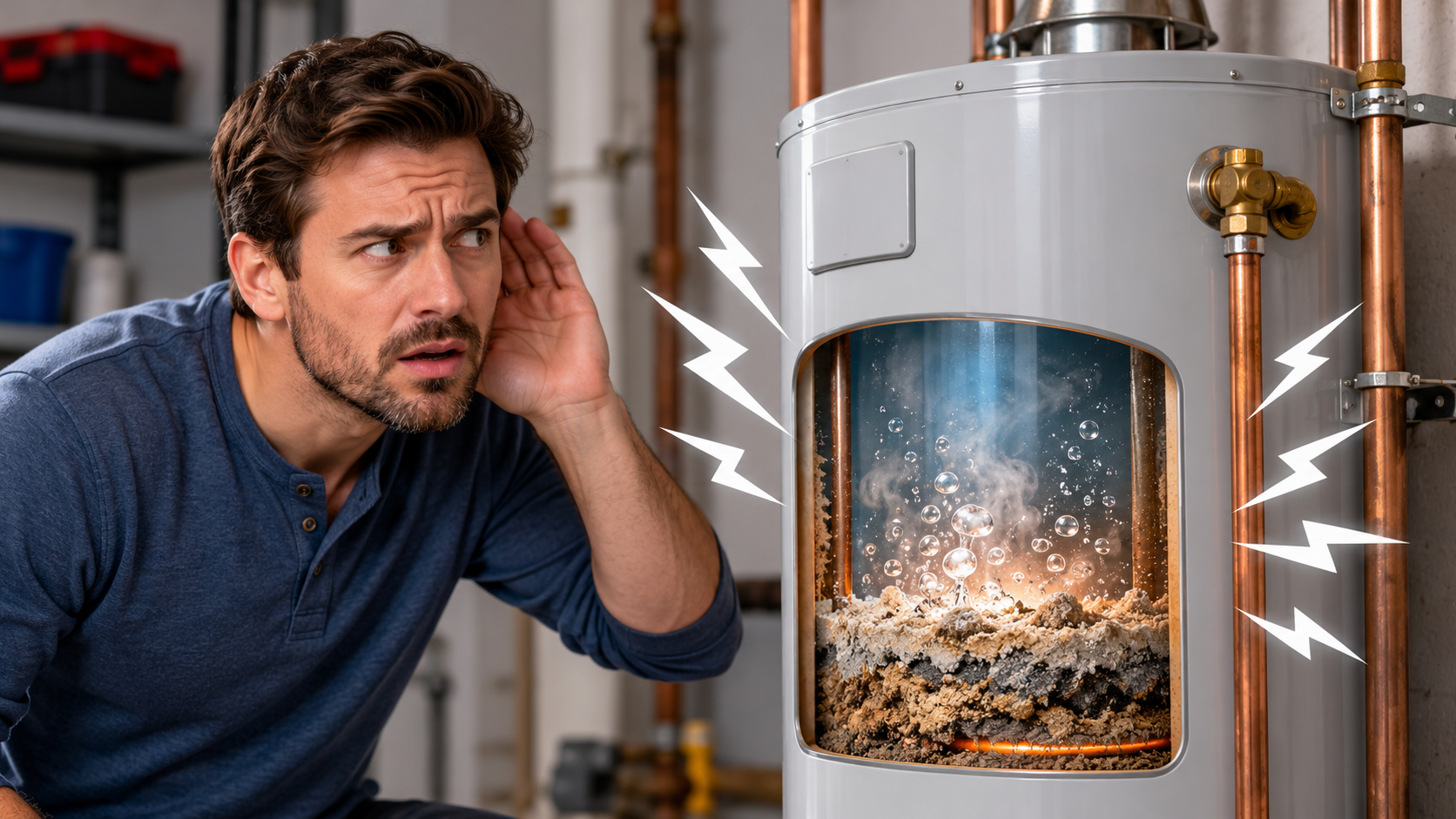
If you’ve been hearing your water heater making a popping noise or even a rumbling, it’s the system’s way of telling you something is off. Most popping and rumbling noises come from inside the tank and can be caused by sediment, mineral, and scale buildup, or pressure issues. Regardless of the cause, this usually strains your system and requires a water heater repair. Learn more about the common causes and when to call Republic Home Services for a quick repair.
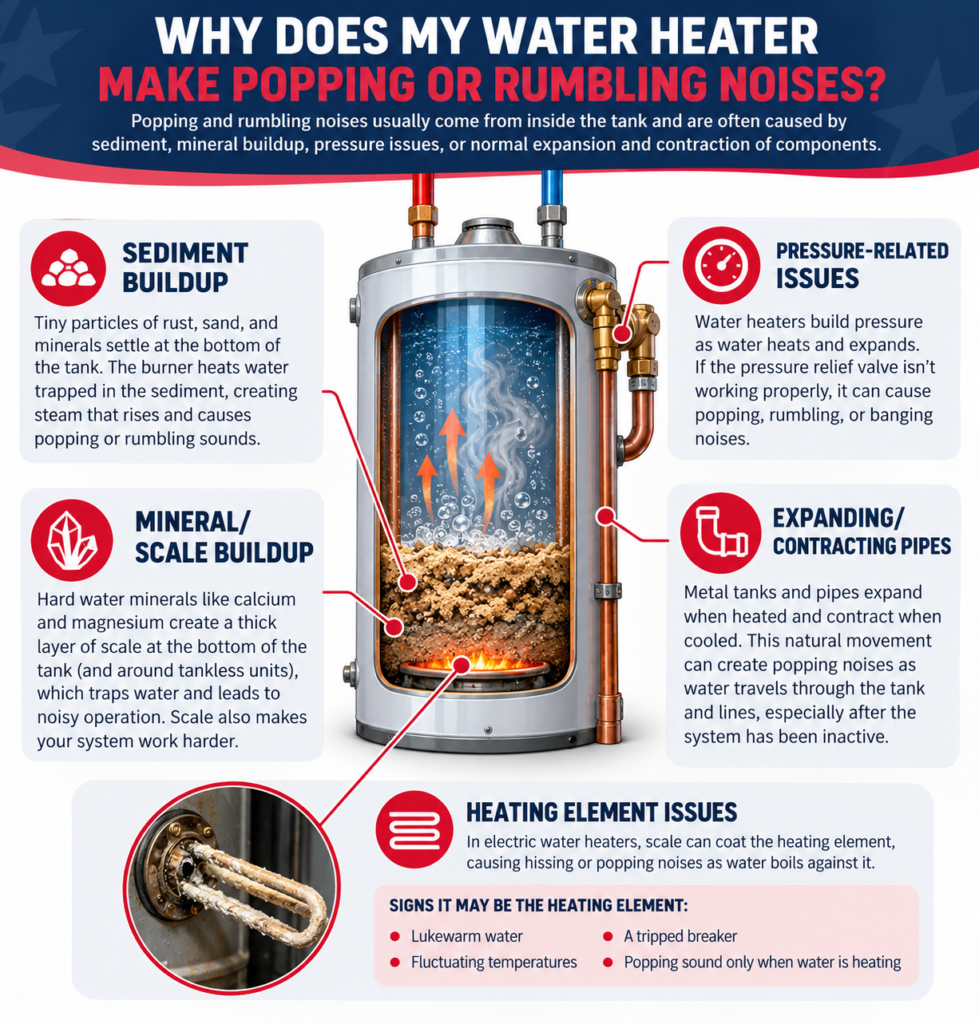
Sediment buildup
Sediment buildup is the number one reason a water heater will start rumbling. All water carries tiny particles of rust, sand, and minerals that can form a thick sludge at the bottom of your hot water tank.
In a gas water heater, the burner sits on the bottom of the tank. Heated water has to travel through the sediment layer, and if it’s thick, most of it gets trapped, creating steam. This steam rises to the top and creates a popping or rumbling sound.
The sediment layer doesn’t just make noise. It forces your water heater’s burner or heating element to work harder and run longer to heat the same amount of water. This puts unwanted strain on the unit and drives up your energy bill.
Mineral/scale buildup
In Texas, some areas have very hard water, full of minerals like magnesium and calcium. Like sediment buildup, this mineral buildup creates a thick layer at the bottom of your tank that traps water and creates a noisy water heater. It can also bond to the tank siding and become difficult to remove if left for a long time.
In tankless water heaters, hard water minerals can also create scale and form a crusty layer around the system, making it work harder.
Heating element issues
In electric water heaters, a heating element can also cause you to ask, “Why is my water heater making noise?” Scale and mineral buildup can coat these heating elements and create hissing or popping noises as the hot water boils against the surface.
Signs your heating element is to blame include:
- Lukewarm water.
- Fluctuating temperatures.
- A tripped breaker connected to the water heater.
- A popping sound only when the water is heating.
A scaled-out heating element will always have a shorter lifespan and burn out faster than a properly maintained one.
Pressure-related issues
Water heaters hold tremendous pressure from heating and expansion. In a tank system, a pressure relief valve releases that excess pressure. When it fails, you may hear popping, rumbling, or banging sounds.
Expanding/contracting components or pipes
Metal and piping systems expand when heated and contract when cooled. As your water heater fires, the tank and connecting pipes shift slightly from their cooled position. This can create popping noises as water travels through the tank and lines.
This is more of a predictable sound and usually happens when the water heater has been inactive for a bit. If the noise is frequent, you can add pipe insulation or have a plumber reroute the pipes.
Is a Popping or Rumbling Water Heater Dangerous?
A water heater making noise is usually not an immediate emergency, but it signals that your system needs maintenance to prevent inefficiency and higher energy bills. Never ignore the noise, because it could signal the early stages of an unnecessary breakdown.
Can Sediment Buildup Damage Your Water Heater?
Water heater sediment buildup is common, but if you ignore it too long, it can damage your burner and heating elements. As the sediment builds, it can also promote corrosion, creating pinhole leaks and cracks within the tank. It can also clog your drain valve and cause other issues.
Leaving sediment buildup too long reduces tank lifespan, raises energy bills, and increases the chance of unwanted leaks.
Will Flushing a Water Heater Stop the Noise?
If sediment buildup at the bottom of your tank is causing the noise, a water heater flush almost always stops it. Most homeowners recognize a difference immediately. However, if hardened deposits have formed a thick scale, a flush may not remove the noise entirely. In that case, you may need scale removal services or, in severe cases, a full water heater replacement.
A water heater flushing service won’t remove sounds caused by pressure valve imbalances or failing heating elements.
When to Call a Plumber for a Noisy Water Heater
Always call the plumbers at Republic Home Services if:
- You have any leaks after the rumbling or popping noises.
- You don’t know how to safely flush a hot water tank.
- The noise is frequent and getting worse.
- You want to take advantage of our frequent special deals.
- You need water heater repairs in Red Oak, TX, and surrounding areas.
- You see visible corrosion or rust in the tank or fittings.
- Your water heater is making noises and is older (more than eight years old).
Our licensed plumbers will inspect your tank, test the heating pressure, heating elements, and burners, and make any needed repairs.
We also catch water heater issues early with maintenance jobs covered by our membership program.
Does Your Water Heater Need Repair or Replacement?
You may be wondering if your water heater needs repair or replacement. Always consider these factors when making your decision:
- The age of the unit: Most water heaters last up to 10 years and may still need repairs after that.
- The actual issue: If the issue is localized to only one part, repair makes sense. If two or more parts are failing, replacing the unit makes more sense.
- Corrosion or cracking: If your tank is corroded or cracked, replace the entire unit.
- Energy bills: If your energy bills keep rising even after multiple repairs, replacing the unit makes more sense.
With Republic Home Services payment plans, replacing your water heater won’t strain your wallet.
Call on Republic Home Services for All Water Heater Needs
Now that you know the reasons for a noisy water heater, you are a more informed water heater owner. If the issue is sediment-related and you are unsure how to flush a tank safely, knowing who to call will save you stress. Republic Home Services will assess your water heater’s condition, flush it, and leave the system in peak condition. Call us today to book a consultation.
Frequently Asked Questions
How often should I flush my water heater?
We recommend flushing once a year to stay ahead of the sediment buildup. If your area has severe hard water, flushing twice a year may be more beneficial.
Will installing a water softener help reduce the sounds from a noisy water heater?
Installing a water softener in your home can significantly reduce mineral buildup in your water system. This can extend your water heater’s lifespan and reduce popping or rumbling noises.
When should I turn off my water heater if it’s making noise?
If the noise is severe and sounds violent, turn off the water supply and power to the water heater, then call a plumber. Also, if you notice water leaking or smell gas (rotten eggs), turn off the supply and leave the premises.