
 24/7 365 days a year!
 Schedule
 +500 Positive Reviews
Why Is My Furnace Blowing Cold Air? 8 Common Causes and Fixes
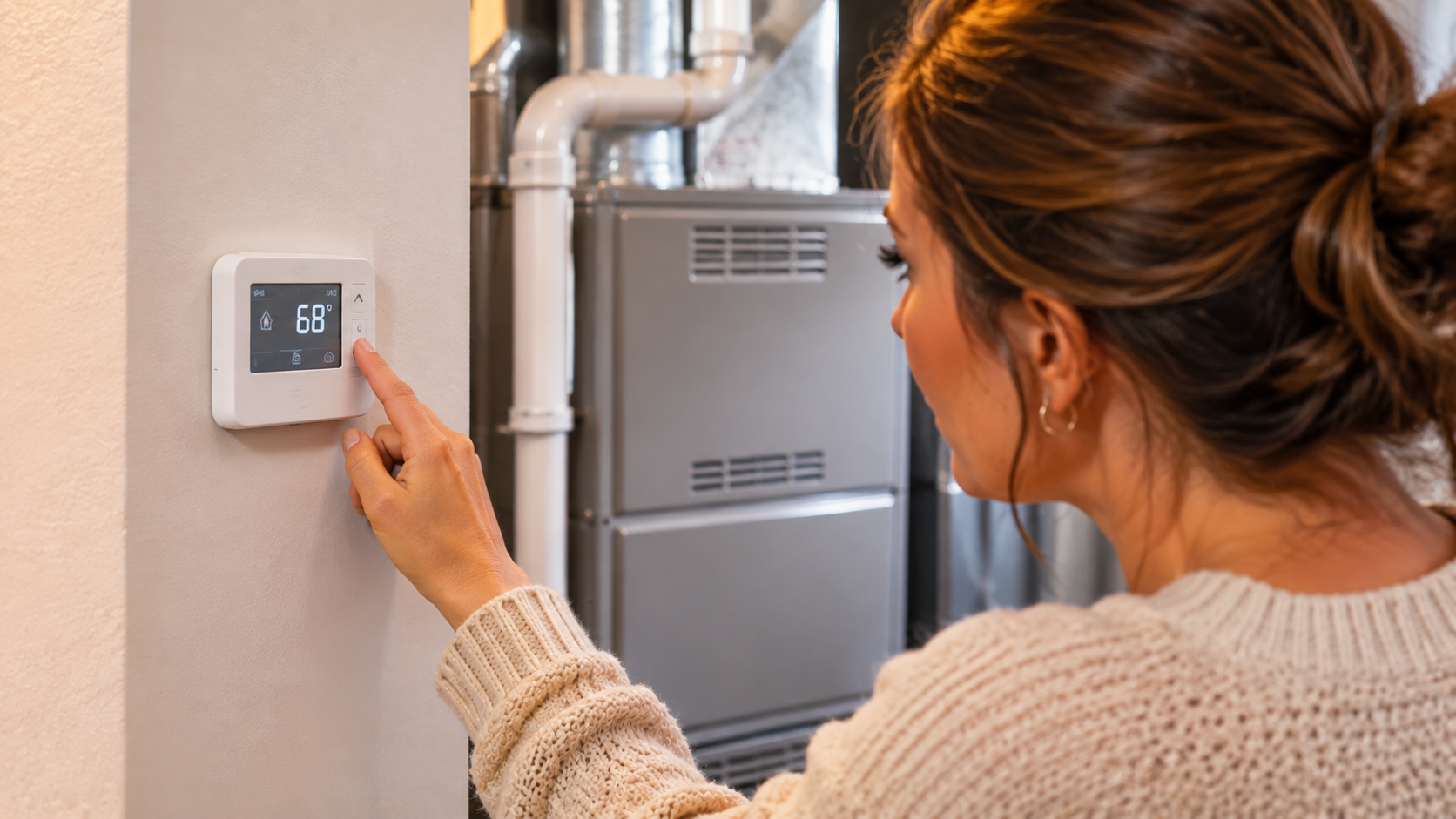
A furnace blowing cold air is one of the most common heating calls we get across Red Oak, Waxahachie, and Midlothian. Some fixes take two minutes at the thermostat, while others require a licensed technician. If you’re wondering why your heater is blowing cold air, the answer may be as simple as a thermostat setting or as involved as an ignition problem. Learn what to check, what to leave alone, and when it’s time to call the pros at Republic Home Services.
Check Your Thermostat Settings First
Start with the thermostat fan setting. If the fan is set to “ON,” the blower can run continuously, including between heating cycles, circulating air that may feel cool. Switch it to “AUTO” so the blower operates according to the furnace’s heating cycle.
Confirm the system is set to “HEAT” and the target temperature sits a few degrees above the current room temperature. Dead batteries can also cause odd behavior, so swap them if the display looks dim.
North Texas weather sometimes calls for more frequent thermostat adjustments. Mild afternoons can give way to freezing nights, and households may switch between heating and cooling as temperatures fluctuate. A smart thermostat makes those swings easier to manage.
If your thermostat setting isn’t the issue, check out these eight common causes and fixes for a furnace blowing cold air.
1. Furnace is still warming up
It’s normal for a furnace to blow cold air at first. After the burners light, the heat exchanger warms before the blower begins circulating air. The timing varies by furnace, so the first air from the vents may feel cool or lukewarm.
After a long North Texas summer, the first heating cycle may produce a temporary dusty smell as accumulated dust burns off. Don’t confuse this with a persistent startup delay or a furnace that continues blowing cold air. If the air turns warm after a few minutes, it’s fine. If it stays cold, keep reading to learn about more possible causes.
2. A dirty or clogged air filter
A furnace filter clogged with dust restricts airflow. With too little air moving across the heat exchanger, the furnace overheats and the limit switch trips as a protective measure. The blower may keep running, which is why your furnace runs but blows cold air. A dirty filter can cause a furnace to blow cold air.
Ellis County homes may experience additional filter loading from seasonal allergens like mountain cedar pollen and household dust. Check your filter monthly during heating season and replace it if it’s visibly loaded with dust or airflow is restricted. If a fresh filter doesn’t change anything, the problem runs deeper. Call us for furnace repair near you to identify the cause.
3. Pilot light or ignition problems
If the burners never light, the blower has nothing warm to push. Older furnaces use a standing pilot light, and a furnace pilot light that’s out is a common reason for no heat. Many newer furnaces use electronic ignition instead of a standing pilot light. Some use a hot surface ignitor, which heats up to ignite the gas.
A faulty ignitor can prevent burners from lighting properly. This is not a DIY repair. Relighting a pilot or replacing an ignitor involves the gas train, and that work should be done by a licensed technician.
4. Dirty flame sensor
The flame sensor is a thin metal rod that confirms the burner is lit. When it gets coated with soot or residue, it can’t read the flame, so the furnace shuts the gas off as a safety response. You get a cycle where the furnace starts, the burners flash, and then nothing. A dirty flame sensor is one possible reason for a furnace running but producing no heat.
A dirty flame sensor can affect furnaces of different ages. A qualified DeSoto furnace repair technician can inspect the sensor and determine whether cleaning or replacement is needed.
5. Gas supply issues
A furnace needs a steady gas supply to make heat. Many gas furnaces rely on a natural gas supply delivered through utility lines. A supply interruption or equipment problem can prevent the burners from lighting, leaving the blower circulating air without heat. Do not touch the gas valve yourself.
If you smell gas, which often smells like rotten eggs, leave the home immediately. Don’t use light switches, phones, or anything that could spark. Once you’re outside, call your gas company or 911. If the smell is absent but the furnace seems to have no fuel, call us for help. Our emergency heating repair team is available when you can’t wait until morning.
6. Leaky or disconnected ductwork
Sometimes the furnace generates heat, but it never reaches the room. North Texas attic ductwork is exposed to significant seasonal temperature changes. Over time, aging materials, poor installation, or damaged connections can cause duct leaks, disconnections, or reduced airflow.
In winter, those same ducts run through a freezing attic, so a leak dumps warm air into the attic instead of your rooms. If some vents blow cold while others seem fine, or your gas bills are climbing, your ducts are worth investigating. Professional air duct repair seals or replaces damaged sections so heat goes where it should.
7. Clogged condensate line
High-efficiency furnaces pull so much heat from the exhaust that they produce condensation, which drains out through a small line. When that condensate line clogs or freezes, a safety switch shuts the furnace down. The February 2021 Texas freeze demonstrated how prolonged subfreezing temperatures can affect home heating systems.
You may notice water around the furnace or a system that starts, then quits. If a condensate line becomes blocked or freezes, a qualified furnace repair technician in Cedar Hill can inspect the drainage system and address the underlying issue.
8. Heat pump defrost mode or low refrigerant
If your home uses one, a heat pump blowing cold air may be completely normal. During cold, damp weather, frost can accumulate on a heat pump’s outdoor coil. The system may temporarily enter defrost mode, reversing its operation to melt the frost. During this cycle, indoor air may feel cooler than usual, and steam may rise from the outdoor unit.
This is generally normal when the cycle ends and heating resumes. If the cold air persists, it may indicate low refrigerant, a failing reversing valve, or a compressor issue. Our team provides heat pump repair and service for all of these.
Simple DIY Steps vs. When To Call a Pro
North Texas homeowners can perform a few basic checks before calling a technician. If the furnace continues to shut down, avoid repeatedly resetting it. Contact a qualified HVAC technician to identify the underlying cause.
Safe steps you can try yourself include:
- Confirm that the furnace switch is on.
- Set the thermostat to “HEAT” and the fan to “AUTO.”
- Replace batteries in the thermostat.
- Swap in a clean filter.
- If the furnace has lost power, contact a qualified technician to find out why the circuit tripped.
You may need furnace repair near you if:
- You smell gas.
- The furnace pilot light is out.
- The burners won’t light.
- The furnace cycles on and off repeatedly.
- Only some rooms get warm air.
- You see water around the furnace.
Get Your Heat Back Fast With Republic Home Services
A furnace blowing cold air on a chilly North Texas night can be uncomfortable, but a qualified technician can help identify the cause. Whether the issue involves a filter, sensor, or another component, Republic Home Services provides reliable heating repair in Red Oak, Waxahachie, Midlothian, and throughout Dallas and Ellis Counties. Contact us today to schedule service.