
 24/7 365 days a year!
 Schedule
 +500 Positive Reviews
Planning a Bathroom or Kitchen Remodel? Don’t Forget the Plumbing
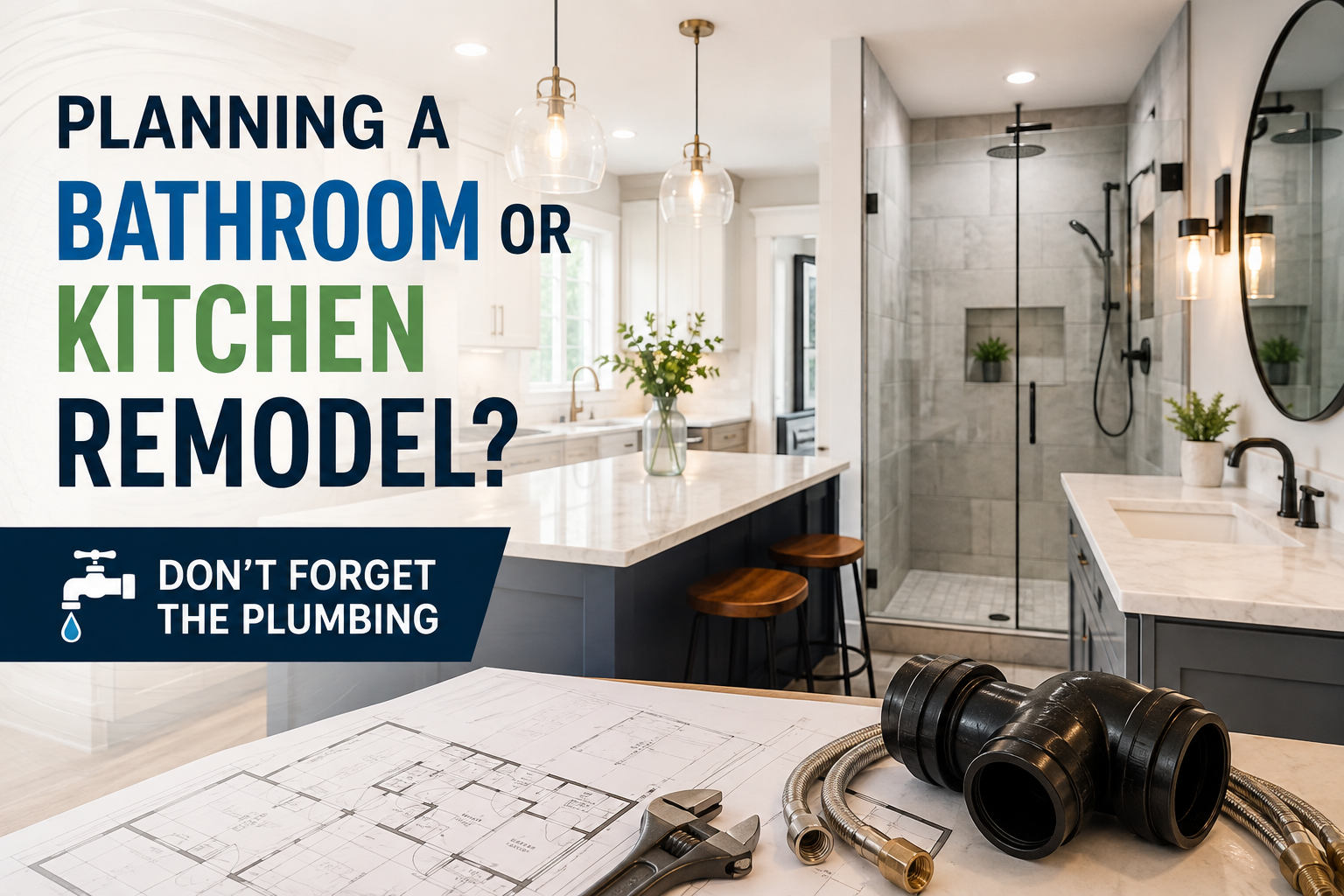
Bathroom or kitchen remodels are among the most impactful home improvement projects, and the best return on investment comes from remodels that don’t skip any steps. Although not as glamorous as marble countertops, spa tubs, or heated floors, proper plumbing for bathroom remodels and kitchen remodels is the foundation for long-term value.
Why Plumbing Should Be One of the First Considerations During a Remodel
Although plumbing is largely out of sight in kitchens and bathrooms, renovations should start with supply and drainage systems. Many homeowners focus on finishes, cabinets, countertops, and fixtures, but even the best interior design won’t matter without essential functionality. Since plumbing systems aren’t as visible as finishes, they’re easy to overlook during a remodel — until a problem arises.
With proactive plumbing, however, you can avoid costly surprises and delays during your remodel. Plumbing decisions impact layout, functionality, and long-term performance, so starting with upgrades for old systems, rerouting for rough-ins, and other frequently overlooked factors protects your investment and will give you a more accurate estimate of your total costs.
Common Plumbing Issues Discovered During Bathroom and Kitchen Renovations
Kitchen and bathroom renovations commonly reveal sneaky and potentially disastrous plumbing problems, such as:
- Aging pipes: Remodels are common in older homes with original plumbing, and tearing walls down can uncover lines made from cast iron, galvanized steel, or even lead pipes for Texas homes built prior to 1989.
- Corroded plumbing lines: Without replacement, corroded plumbing lines affect water pressure, lower water quality, and cause hidden leaks.
- Improper previous installations: DIY or unpermitted work may cause incorrect drain slopes, improper venting, and dislodged pipes.
- Hidden leaks behind walls: Even small leaks can lead to significant water damage and mold, sometimes requiring major remediation and restoration work.
- Outdated shut-off valves: Many Texas homes have multi-turn shut-off valves that eventually seize up or leak with age and corrosion.
- Drainage and venting issues: Poor venting and drainage cause clogs, slow drains, unpleasant odors.
- Water pressure concerns: The existing lines may be improperly sized for new fixtures or lack pressure regulators, which can affect water pressure throughout your home.
When Should You Upgrade Plumbing During a Remodel?
The need to replace or upgrade plumbing during a remodel depends on your renovation project details, budget, and the existing plumbing system’s condition. These factors suggest that you should include plumbing work in your renovation plan:
- Aging plumbing system: Replacing outdated or deteriorated pipes is most convenient if the space already has open walls during remodeling.
- Altered layouts: Changing the layout of fixtures requires rerouting supply and drain lines.
- New fixtures: Older plumbing may be unable to accommodate the supply and water pressure needs of modern fixtures.
- Expansion: Larger bathrooms and kitchens often means increased water and drainage demand, and plumbing codes usually require modifying plumbing to match an expanded space.
- Efficiency upgrades: High-efficiency, low-flow fixtures require properly sized plumbing and slopes to avoid slow drainage, clogs, or backups.
Plumbing Considerations for Bathroom Remodels
Each bathroom remodel is unique, ranging from basic cosmetic updates to more intensive demolition, renovation, and plumbing modifications. Depending on your project, plan for bathroom remodeling plumbing details such as:
- Relocating toilets, tubs, or showers: Requires rerouting supply and drain lines.
- Upgrading supply lines: Prevents leaks, improves water pressure, and ensures compatibility with new fixtures.
- Drain and vent requirements: Each fixture needs a drain and vent, with pipe sizing, slope, and distance depending on plumbing codes.
- Installing luxury fixtures: Plumbers ensure precise setup, waterproofing, and code compliance to protect premium fixtures.
Plumbing Considerations for Kitchen Remodels
Kitchens have many water fixtures and appliances that come with higher demand and more complex plumbing than old layouts. Keep these kitchen remodeling plumbing factors in mind:
- Sink relocation: Moving a sink may involve extending supply lines and redirecting drains as well as moving the dishwasher and its power supply.
- Garbage disposal installation: New garbage disposals require accurate drain height and traps, dishwasher integration, sealing, and venting.
- Ice maker water lines: Ice maker lines may need specific valves, supply line materials, and water filters.
- Pot fillers: Pot filters must have compatible faucets and rough-in placements, plus properly installed valves for leak prevention.
- Gas lines for ranges: Plumbers verify precise BTU requirements and install or modify gas lines according to code.
- Water filtration systems: Filters require enough space for installation and dedicated lines to appliances.
The Hidden Costs of Skipping Plumbing Upgrades
Skipping plumbing upgrades during a kitchen or bath remodel may reduce upfront spending, but it can result in significantly higher costs later on. Without code-complaint plumbing, your newly remodeled bathroom or kitchen is at a much greater risk of overburdened pipes, legal issues, ineligible warranty or insurance claims, and major damage.
With professional plumbing upgrades during renovations, you can avoid costly complications such as:
- Water damage and mold that affects structural strength, drywall, floors, and cabinets.
- Plumbing issues may deter buyers and reduce home value.
- Sudden failures and emergency plumbing expenses.
- Failed inspections during future home sales.
A Remodel Plumbing Checklist for Homeowners
A thorough plumbing checklist helps make remodels go smoothly. Make sure your remodel plan includes these items:
- Schedule a plumbing inspection: Schedule a professional plumbing inspection before remodeling to evaluate existing lines before closing up the walls.
- Identify pipe materials and condition: Check for aging or deteriorating lines that may require repiping during remodeling.
- Confirm fixture locations: Create a final layout with exact locations for sinks, toilets, appliances, and other fixtures.
- Verify drainage and venting: Check that each fixture has proper venting.
- Discuss water pressure concerns: Ask your plumber to test current pressure levels and determine whether it’s too low or high.
- Consider future plumbing needs: Factor in future remodels and plumbing needs, such as water filtration or softeners, bidet-ready toilets, or secondary water lines.
- Ensure permit and code compliance: Confirm with your plumber that the pre-existing and new upgrades comply with local permit requirements and codes.
Why Hiring a Licensed Plumber During Your Remodel Matters
Hiring a licensed plumber for your kitchen or bathroom remodel facilitates safety, code compliance, and long-term value. Cosmetic updates are generally exempt from permit or code requirements, but major renovations usually require a licensed plumber for permits and inspections.
Licensed plumbers also have the expertise to plan and install pipes, venting, and other components according to local codes. While unlicensed or DIY work increases the risk of fines, health hazards, or mandatory rework and re-inspections, licensed plumbers protect your investment through both correct bathroom and kitchen plumbing installation and valid insurance claims in case of later problems.
Partner with Republic Home Services Before Your Next Remodel
As the go-to plumber in Ellis County and surrounding communities, Republic Home Services is ready to support your kitchen or bathroom plumbing remodel. Whether you need plumbing inspections, new installations, pipe replacements, or other kitchen and bathroom plumbing services, contact us today to learn how our team can help.
Bathroom and Kitchen Remodel FAQs
Should plumbing be replaced during a bathroom remodel?
If your plumbing is aging, corroded, leaking, or difficult to access once the remodel is complete, replacing it during the renovation prevents future repairs. You don’t necessarily need to replace all plumbing, but upgrading problematic areas helps to protect your investment.
How much does plumbing add to a remodel budget?
Plumbing costs for remodeling budgets vary, depending on fixture relocation, pipe condition, and project complexity. A professional plumbing evaluation outlines costs before the remodel construction.
Can I move a sink, shower, or toilet during a remodel?
In many cases, yes, you can move sinks, showers, and toilets during remodels. However, moving plumbing fixtures often requires modifying supply lines, drains, and venting systems, which impacts project scope and cost.
What plumbing upgrades add the most value?
Plumbing upgrades that add the most value include replacing outdated pipes, upgrading shut-off valves, improving water pressure, and adding modern kitchen conveniences. Adding smart leak detection systems and water-efficient systems also add value to your home.
Should plumbing be inspected before remodeling?
Yes, plumbing should be inspected before remodeling to identify necessary upgrades. A plumbing inspection uncovers hidden issues that may otherwise cause delays, change orders, or expensive repairs once demolition begins.